Boost Skid Steer Hydraulics with Flat Face Couplers
- Share
- Issue Time
- Jul 13,2026
Summary
Upgrade your skid steer with flat face hydraulic couplers. Designed for higher flow rates and leak-free connections, they deliver maximum hydraulic power and reduce maintenance downtime. Perfect for demanding attachments and heavy-duty jobs.
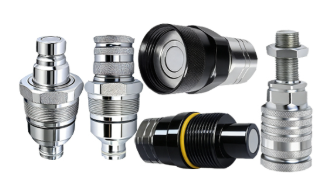
Boost Skid Steer Hydraulics with Flat Face Couplers?
If you're running a skid steer—Bobcat, Caterpillar, John Deere, Takeuchi, or Kubota—into high-flow attachments like mulching heads, brush cutters, grapples, or cold planers, your hydraulic couplers are either enabling peak power or quietly strangling it. For global contractors coming out of seasonal downtime, the difference between a flush-faced flat face coupler and a worn, undersized standard connector can be the difference between a productive spring and a week of unplanned downtime. The short answer to the headline question: yes—upgrading to purpose-built flat face couplers is one of the highest-ROI moves you can make for skid steer hydraulic performance.
Why Flat Face Couplers Matter More Than You Think
Skid steer hydraulic systems on modern machines routinely see 3,000–4,000 PSI system pressure and, on high-flow circuits, 30–50+ GPM. Mulching heads and forestry cutters sit at the top of that demand curve—they need both volume and consistency. Any restriction, internal leakage, or pressure drop at the coupler interface shows up downstream as:
- Overheating – restricted flow forces the system to work harder, heat rises, oil breaks down faster.
- Torque loss at the attachment – the mulcher slows in heavy brush exactly when you need it most.
- Seal washout and contamination – every drip that lands on a job site is also a pathway for grit back into the system during reconnect.
- Residual-pressure lock-up – you go to swap attachments and the couplers won't seat because trapped pressure in the implement line won't bleed off.
Traditional nipples-and-sleeve agricultural-style couplers weren't designed for this duty cycle. Flat face (flush face) couplers were—and the gap widens the more your machine leans on high-flow auxiliary circuits.
The Spring Startup Problem (and Why Global Fleets Feel It First)
Whether you're coming out of a North American freeze, a European wet season, or an Australian summer downtime, seasonal restart exposes every weakness in a hydraulic loop:
- Cold-start viscosity spikes leave residual pressure trapped in attachment lines—making couplers nearly impossible to connect without bleeding the system manually.
- Debris buildup over idle months works its way into seal grooves and poppet seats.
- Seal fatigue from winter cycling or storage means the first few hours of spring work can turn a weep into a spray.
- Corrosion on the mating faces makes "connect under pressure" feel like a wrestling match.
Infield surveys across rental fleets and owner-operators consistently trace "slow attachment response" and "leak at QD" calls back to couplers that are either worn past tolerance or simply undersized for the flow the machine is trying to push. On high-flow mulchers, a ¼" restriction in a coupler can translate to double-digit percentage flow loss.
What a Proper Flat Face Coupler Actually Delivers
The "flat face" name comes from the flush-mating interface. When you disconnect, the faces wipe clean; when you connect, there's minimal spill and minimal air ingestion. But the real performance story is in the engineering behind that face:
Connect Under Pressure (CUP)
On many job sites, the operator forgets to relieve residual pressure in the attachment before swapping—or the relief path is slow. Quality flat face couplers (manual or threaded) are engineered to seat even with several hundred PSI trapped on the implement side. That means fewer "I can't get them to click" moments and less hammering on the sleeve with a mallet (which destroys seals in three hits).
Flow Capacity Without Throttling
Internal porting in a skid-steer-rated flat face coupler is sized to match or exceed the machine's auxiliary GPM. Look for models that publish pressure-drop curves at your operating flow—if a coupler adds 50 PSI of drop at 40 GPM, that's horsepower leaving as heat instead of reaching the mulcher.
Contamination Control
The flush face acts as its own dust shield. In land-clearing and vegetation work, that matters—fine dust getting past a poppet is fine dust grinding a hydraulic pump two weeks later. Some flat face designs add secondary sealing rings and metal-to-metal poppet seats for longer life in abrasive environments.
Pressure Rating Consistency
A coupler is only as strong as its weakest pressure rating—working pressure and burst pressure should both be published. For skid steer high-flow, look for working pressures in the 4,000–5,000 PSI range and burst ratings that comfortably clear system relief settings.
Which Series Fits Which Job?
Not all flat face couplers belong on every machine. Two families cover most skid steer scenarios:
- Manual CUP-style series (e.g., APM-class) – push-to-connect with internal pressure-relief pathways. Best for operators who change attachments frequently and want a fast hand-connect without threading. Ideal for mulchers, grapples, augers on mid-size skid steers.
- Thread-to-connect series (e.g., VEP-class) – screw-together interface that handles higher residual pressure and heavier impulse loads. Preferred on high-pressure cold-climate startups, demolition thumbs, and rock breakers where spike loads are aggressive.
Both are available in the thread forms and body sizes that match major OEM skid steer aux patterns—Bobcat, Cat, John Deere, Kubota, Takeuchi, and others each have their own nominal spec, but the flat-face interchange ecosystem is mature enough that a single parts bin can cover a mixed fleet.
Seven Red Flags Your Couplers Are Costing You Money
If you're inspecting before peak season, watch for these:
- Visible weep at the face after disconnect—seal is compromised.
- Hard to push together even when pressures should be balanced—internal poppet wear or debris.
- Sleeve feels gritty or sticky—contamination in the locking mechanism.
- Corrosion pitting on the mating face—will never seal clean again.
- Hose whip or coupling walk under load—retaining balls or snap-ring wear.
- Attachment response lag that clears after a few minutes of cycling—cavitation from internal bypass.
- Oil darkening faster than normal between changes—micro-leak ingesting air/dust at the QD.
Any one of these justifies replacement. Two or more and you're already on borrowed time.
Global Operating Conditions: One Size Doesn't Fit Every Climate
A coupler that lives on a Florida land-clearing crew sees different abuse than one on a Norwegian forestry track:
- Cold climates – seal compounds matter. Standard NBR seals stiffen below –20°C; Viton or polyurethane blends keep the connect-under-pressure behavior consistent. Thread-to-connect styles shine here because they don't rely on a spring-sleeve mechanism that can ice up.
- Dusty/tropical – UV and abrasion resistance on the coupler body coating, plus dust caps that actually stay on during transport. The flat face design already helps, but cap retention is still the weak link.
- Rental fleets – durabilty under "worst-operator" conditions drives the choice toward heavy-section bodies and replaceable seal kits rather than throwaway units.
Specifying by climate and duty cycle, not just by "skid steer coupler," is where the global operator gains an edge.
OEM Pattern Compatibility Without the OEM Price Tag
Major brands all use variations of the same ISO 16028 flat face pattern, but with brand-specific thread (SAE, BSPP, BSPT) and body-size twists:
- Bobcat – ½" and ¾" body, SAE ORB or JIC ends common on aux circuits.
- Cat / John Deere / Takeuchi / Kubota – similar nominal sizes but verify thread form; mixing NPT with BSPP is the fastest way to create a leak that no seal tape will fix.
A qualified supplier will cross by machine serial if needed—don't guess on thread form, especially on a global order where returning a pallet of couplers costs more than the parts.
Three Maintenance Moves That Add Years
- Wipe the face before every connect. A shop rag takes two seconds; a contaminated seal takes two hours to replace roadside.
- Relieve pressure at the attachment before disconnect. Even CUP-rated couplers last longer if you don't make them fight 2,000 PSI every time.
- Keep spare seal kits on the truck. Poppet seal replacement in the field beats waiting for a new coupler shipment to a jobsite in rural Queensland or northern Alberta.
Bottom Line for the Season Ahead
Your skid steer is only as capable as the flow that reaches the attachment. Flat face couplers aren't a glamorous upgrade, but they're one of the few components where a few hundred dollars per pair prevents thousands in downtime, oil loss, and attachment underperformance. For mulching, land clearing, and any high-flow auxiliary work, the case is closed: flush-faced, correctly spec'd couplers pay for themselves inside a season.
Going into peak season with a mixed fleet or a machine that's showing its age? Audit the couplers first. The hydraulic power you unlock might be the difference between finishing the job and watching the mulcher stall in the thick stuff.