Check the Application Before Replacing a Hydraulic Coupler?
Hydraulic Quick Couplers · Maintenance & Reliability · Global Field Guide
Yes — and in most cases it takes less than ten minutes. When a hydraulic quick coupler leaks, locks up or fails, the instinct is to match the part number and get the machine back to work. That is still the right answer for a coupler that simply reached the end of its service life. But when the same connection keeps failing, a part-number match only re-orders the same problem. Review the application first: pressure, flow, residual pressure, contamination, connection frequency, hose movement and operator workflow decide whether the replacement will actually perform in the field.
The short answer
Before you order a replacement hydraulic coupler, separate normal wear from a recurring application problem:
- Replace it and move on if the coupler failed because it was worn, corroded, crushed, cracked, or handled roughly — a correctly specified replacement will restore the connection.
- Stop and review if the same connection keeps leaking, overheating, pressure-locking, disconnecting unexpectedly, or frustrating operators. In that case the coupler is a symptom, not the root cause.
- Review four things before ordering: identification (face style, body size, thread, port), performance (working / peak / burst pressure, flow rate, pressure drop, media, seal material, temperature), conditions (residual pressure, vibration, contamination, washdown, salt, cold, heat, impact), and process (connection frequency, hose routing, storage, caps and plugs, operator sequence).
Why a part-number match is not always the fix
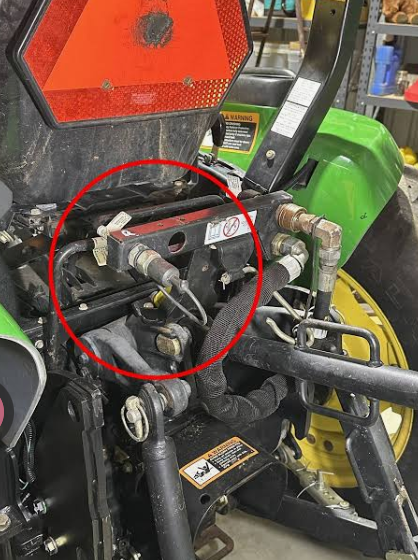
A replacement request usually starts with the fastest available clue. A technician reads a Parker or Eaton number off the coupler body. A distributor is asked to cross-reference a CEJN, Dixon or Faster connection. An equipment owner sends an OEM number, a phone photo from the field, or the damaged coupler itself on a workbench. Those details are genuinely useful for identification — and they are usually enough to find something that screws in and clicks together.
What they rarely explain is what is happening at the point of connection. Two couplers can share a face diameter and an interchange profile and still differ in internal geometry, pressure rating, seal material and flow capacity. A coupler that fits perfectly can still restrict the circuit, run hot, or fail again in a few weeks. That is why the review matters most in exactly the places where downtime is most expensive: high-flow attachments, hydraulic power units, snow-removal equipment, demolition tools, compact machinery, rental fleets and mixed-brand equipment groups.
None of this has to slow the repair down. The goal is not a lengthy engineering study — it is to confirm enough information to avoid installing a coupler that fits physically and fails functionally.
Three questions to answer before you place the order
Keep the request focused on the operating condition instead of reducing it to a catalogue number. Answer these three questions and the correct replacement path usually becomes obvious.
1. How does the machine actually work?
What is the real duty cycle? Is this a high-flow circuit that runs for hours, or a low-cycle service line that connects twice a week? Does the attachment create pressure spikes or hold trapped pressure after shutdown? Is the coupler in a fixed manifold or at the end of a hose that gets dragged, twisted and stood on?
2. What killed the last coupler?
Look at the failure, not just the part. Scored faces and worn locking components point to handling and cycle count. A coupler that will not connect points to residual pressure. Swollen or cracked seals point to media or temperature incompatibility. Heat at the connection points to pressure drop. Rust and pitting point to environment and storage.
3. Will the replacement support the duty cycle?
A coupler that performs well in a low-cycle application is not automatically right for a demolition hammer, a broom, a snow blower or a rental machine that changes attachments several times per shift. Compare the coupler data against the machine's actual operating cycle, not against the old part number.
Recurring coupler problems fall into three categories
System demand
- The coupler is undersized for the actual flow rate.
- Pressure spikes from the attachment or the relief valve exceed what the coupler was rated to absorb.
- Pressure drop across the quick disconnect contributes to heat and measurable performance loss.
- Nominal body size suggests capacity the internal geometry cannot deliver.
Application conditions
- Residual (trapped) pressure makes connection difficult or impossible without a connect-under-pressure design.
- Vibration, impact and high-cycle attachment use fatigue locking components.
- Hose torque and poor hose routing load the coupler body sideways.
- Corrosion from salt, washdown, chemicals or weather storage shortens service life.
- Incompatible seal or media selection — wrong elastomer for the oil, the temperature or the fluid type.
Connection process
- Dirty storage practices and missing dust caps or plugs.
- Reconnecting without cleaning the mating faces.
- Repeated handling by several operators across a mixed fleet.
- Multi-line connection errors and crossed circuits when several hoses are connected one at a time.
If the same replacement request keeps coming back to the same machine, the same attachment or the same operator task, the coupler is only one part of a larger connection problem.
Use S.T.A.M.P. to keep the review honest
The S.T.A.M.P. selection method keeps the review centred on the five variables that actually decide coupler performance.
- S — Size: body size, face diameter, thread type, port style, hose size and hose-end connection.
- T — Temperature: ambient and fluid temperature, including cold starts, sustained heat and any washdown or process heat.
- A — Application: how often it connects, who connects it, what the attachment does, and how the hose is routed and stored.
- M — Media: hydraulic oil type and viscosity, plus any specialty fluid, water glycol, biodegradable oil or chemical exposure — and the seal material that matches it (NBR, FKM, EPDM, PTFE and others behave very differently).
- P — Pressure: working pressure, peak pressure with spikes, burst pressure, and whether the circuit traps pressure after shutdown.
From there the right answer is usually one of five paths: a direct replacement coupler, an adapter or thread conversion, a flat-face upgrade for cleaner connections and lower spill, a connect-under-pressure solution for trapped-pressure circuits, or a multi-coupling plate for multi-line attachments.
Identify the connection you actually have
Start with the details that identify the existing connection: coupler style, interchange profile, body size, face diameter, thread type, port style and hose connection. These determine whether a direct replacement exists, or whether you need an adapter or a thread conversion.
- Face style: poppet-style (ISO 7241-1 series A or B) versus flat-face (ISO 16028). Flat-face couplers wipe clean, spill less and reduce contamination ingress.
- Body size: commonly 1/8" through 2" by nominal body or dash size, but the same nominal size can hide very different flow paths.
- Face diameter: useful for narrowing the family — never as the only measurement.
- Thread type: NPT, NPTF, JIC (SAE 37°), ORB (SAE straight thread O-ring boss), BSPP, BSPT and metric threads are not interchangeable without the correct connection strategy. Confirm thread identification before ordering; a photo, the old part number and a thread gauge are usually enough.
- Port style and hose end: verify whether the coupler is port-mounted or hose-mounted, and match the hose-end interface (crimp, reusable, flange, banjo).
Pressure drop: the specification that quietly costs you horsepower
A replacement coupler can match the visible connection size and still restrict the circuit. That matters most in high-flow attachments, hydraulic power units, snow-removal equipment, demolition tools, compact machinery, and anywhere heat is already a complaint. Pressure drop converts energy into heat instead of work — it shows up as slow attachment response, reduced hydraulic efficiency, higher oil temperature and less usable power at the tool.
Read pressure drop in the context of the full circuit, never by body size alone:
- Compare the manufacturer's pressure-drop curve at your actual flow rate, not at a single reference point.
- Check hose size, port configuration, adapters and any additional restrictions downstream.
- Consider oil viscosity and operating temperature — cold oil raises pressure drop sharply.
- Account for duty cycle: continuous high flow punishes an undersized coupler far more than intermittent use.
Because pressure drop rises roughly with the square of flow, doubling the flow through the same coupler can multiply losses several times over. A "low pressure drop" connection is not a luxury in a high-flow circuit — it is the difference between a tool that performs and a system that overheats. If the pressure-drop chart is difficult to interpret, ask a hydraulic specialist to review the data before you order; it is far cheaper than a second failure.
Review the pressure rating separately from pressure drop. Working pressure, peak pressure and burst pressure are related but not the same. Confirm the equipment's working and burst ratings and identify what causes pressure spikes — relief valve settings, load shocks, cylinder stall conditions or a hammer circuit.
When one coupler is not the problem: multi-line connections
Some replacement requests start as "one bad coupler," but the real issue is a connection process that is too easy to repeat incorrectly. This is common wherever operators connect several hydraulic lines one at a time during attachment changes. Multi-line interfaces create a specific set of problems that no single replacement coupler can solve:
- Crossed circuits — the wrong line into the wrong port.
- Pressure lock — lines that will not connect because the attachment holds trapped pressure.
- Mismatch errors — correct couplers connected in the wrong sequence.
- Lost time and operator frustration at every attachment change.
- Contamination introduced with each separate connection event.
Multi-coupling plates organise several hydraulic, electrical, pneumatic, water and fluid lines into one guided connection process. Instead of relying on individual line matching every time, the plate makes the connection repeatable and directional. Not every replacement request needs a plate — but the process should be reviewed whenever multiple lines, frequent attachment changes or cross-connection risk are part of the complaint.
Contamination: when a good coupler behaves like a bad one
Dirt on the coupler face, uncapped or disconnected hoses lying on the ground, poor storage practices, and reconnecting without cleaning the interface all produce symptoms that look exactly like premature coupler failure. In hydraulic systems, contamination is one of the dominant causes of component wear — and the quick disconnect is the most frequently opened door in the circuit.
Flat-face couplers support cleaner practice because the mating surfaces are easy to wipe before connection. Dust caps, dust plugs, hose storage and a defined operator sequence matter just as much. Standard operating procedures for low- or zero-spill hydraulic processes should include disconnect, storage and reconnect steps — not just the connection itself. This is especially important for rental fleets, mixed equipment groups and high-cycle attachment applications, where several people handle the same machines and attachments and the process has to be clear enough to repeat correctly every time.
Replacement review checklist
- Record the failure: leak, heat, pressure lock, disconnect, seal failure or operator complaint.
- Identify face style and interchange profile (ISO 7241-1 A/B, ISO 16028 flat face, or proprietary).
- Measure body size, face diameter, thread type and port style — confirm threads before ordering.
- Confirm hose size, hose-end type and routing; note any torque or side loading.
- Capture working, peak and burst pressure, including spike sources.
- Record actual flow rate and duty cycle at the connection point.
- Read the pressure-drop curve at that flow rate, not at the nominal body size.
- Confirm media, oil viscosity, operating temperature range and seal material compatibility.
- Ask whether the circuit traps residual pressure after shutdown.
- Assess contamination exposure: job site, washdown, salt, storage, caps and plugs.
- Count connection cycles per shift and how many operators perform them.
- Check whether multiple lines are connected separately at this attachment.
- Decide the path: direct replacement, adapter or thread conversion, flat-face upgrade, connect-under-pressure, or multi-coupling plate.
- Update the operating procedure: clean, cap, store, reconnect.
- Re-check after installation — log the outcome so the next replacement decision is faster.
Frequently asked questions
When should a hydraulic quick coupler be replaced?
Replace it when it leaks, disconnects unexpectedly, becomes difficult to connect or disconnect, shows visible damage, has worn locking components, or allows contamination into the circuit. Repeated seal failure, heat at the connection, pressure lock, excessive wear and recurring operator complaints are also signals. The key is to separate normal wear from a recurring application issue before ordering the next part.
Can I just use the same body size as the old coupler?
Only after you check flow. Nominal body size does not guarantee flow capacity, and pressure drop depends on internal geometry, porting, hose size, viscosity and duty cycle. A coupler that matches the visible size can still restrict the circuit.
Why will my coupler not connect in the morning?
Residual (trapped) pressure is the usual cause. Thermal expansion overnight or an attachment that holds pressure after shutdown can lock the poppet. A connect-under-pressure coupler or a defined pressure-relief step in the procedure solves it; a new standard coupler will not.
Are NPT, JIC, ORB and BSPP threads interchangeable?
No. They use different thread forms and sealing methods, and mixing them causes leaks or cracked ports. Identify the thread before ordering, and use the correct adapter strategy when a conversion is genuinely required.
What is the fastest way to identify an unknown coupler?
Photograph the face and the thread end, measure the face diameter and thread pitch, note the part number if one is visible, and record the hose size and machine model. With those five data points, most suppliers — including specialists such as Ehhydraulic who build brand-compatible solutions for Parker, Faster, CEJN, Dixon and OEM equipment like Bobcat and John Deere — can identify whether the correct answer is a direct replacement, an adapter, or an upgrade.
The bottom line
A replacement hydraulic coupler should not be selected simply because it is the way it has always been done. If you are constantly replacing couplers or dealing with the same issue repeatedly, re-examine the connection strategy: the reason for replacement, the machine's condition, the attachment workflow, and the performance demands at the connection point.
Sometimes the right answer is simple — identify the correct coupler, confirm the specifications and move forward. Other applications need a different path: a flat-face update, a connect-under-pressure solution, a multi-coupling plate, or a custom hydraulic connection package. Cross-referencing is useful when it identifies the correct part and confirms the application requirements. The process review is what stops the same problem from returning.