Ehhydraulic Interchange Guide: Find Your Hydraulic Quick Coupler
- Share
- Issue Time
- Oct 12,2026
Summary
Find your hydraulic quick coupler fast with the Ehhydraulic interchange guide. Match any series by size, thread, and pressure rating.
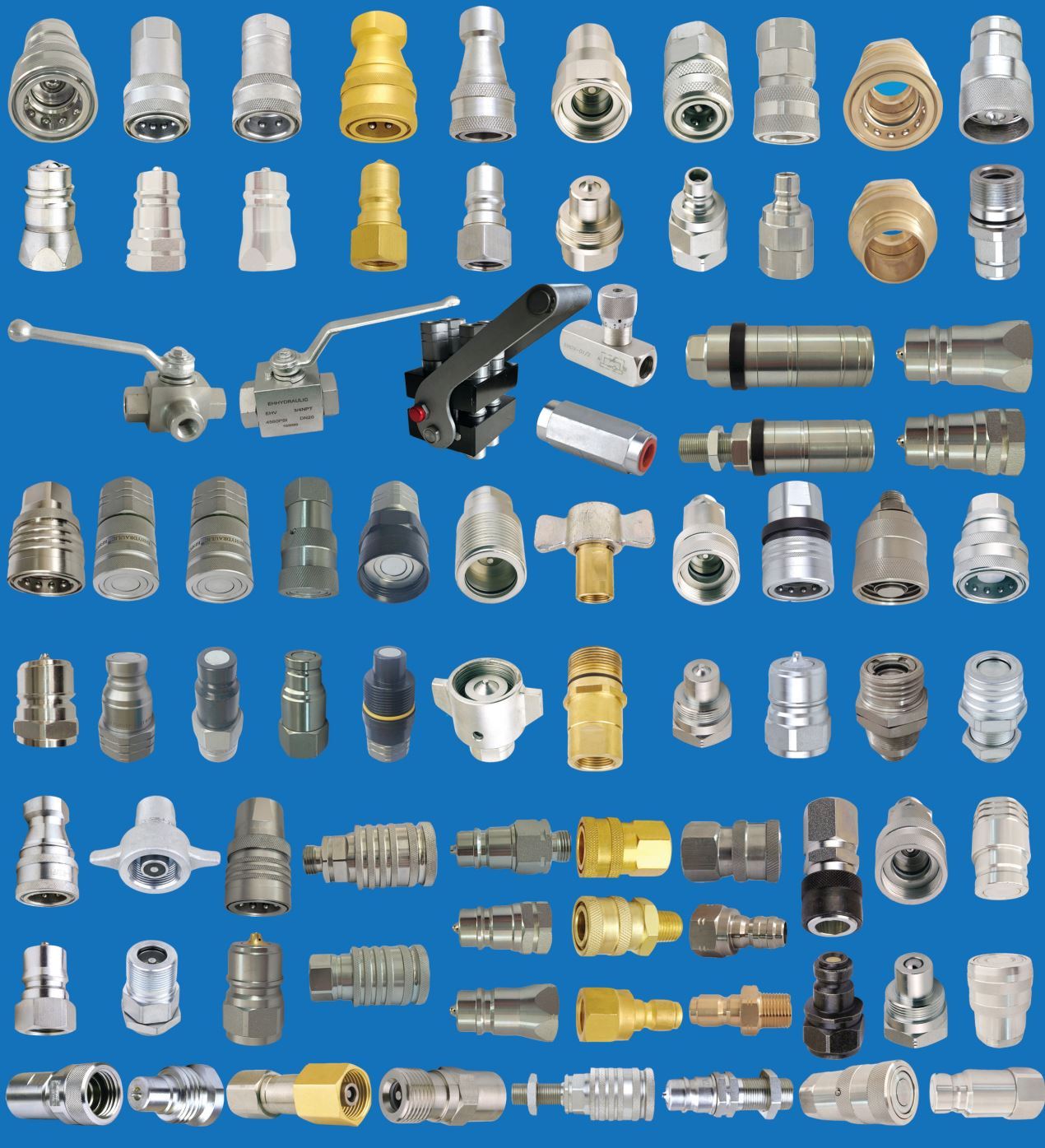
Hydraulic Couplers · Interchange & Selection
Ehhydraulic Interchange Guide: Find Your Hydraulic Quick Coupler?
A worn, unlabelled or obsolete hydraulic quick coupler does not stop a machine from needing repair. The fastest way back to work is an interchange guide: it converts one known manufacturer part number into a short, verifiable list of compatible replacements. The Ehhydraulic Hydraulic Quick Coupler Interchange Guide does exactly that for Aeroquip, Faster, Stucchi,Hansen, Parker, Dixon, Safeway and Snap-Tite numbers — but the part number only opens the door. The application decides which coupler you should actually install.
By the Ehhydraulic Technical Content Team · Read time: 9 minutes · Audience: maintenance teams, distributors, fleet managers and OEM engineers worldwide
Key takeaways (read this first)
- The Ehhydraulic interchange guide — published on Ehhydraulic catalog — lists popular interchanges for Aeroquip, Faster, Stucchi,Hansen, Parker, Dixon, Safeway and Snap-Tite part numbers with the corresponding Ehhydraulic series and order codes.
- A cross-reference identifies a possible physical interchange. It does not guarantee identical pressure drop, materials, seals, residual-pressure capability or duty rating.
- Before ordering, confirm coupling half (female socket or male nipple), interface profile, nominal body size, port and thread (NPT or SAE), material, seal compatibility, maximum flow, working pressure, pressure spikes, temperature and media.
- If the old coupler leaked, overheated, was hard to connect or failed early, fix the cause before reinstalling the same configuration.
- Unlisted part numbers can still have a Ehhydraulic replacement; send photos, measurements and application details to the Ehhydraulic Technical Help Desk.
1. What an interchange guide actually tells you
A hydraulic quick coupler interchange guide is a structured cross-reference. It takes part numbers created by different manufacturers, groups the products that share a common interface family and configuration, and places them on the same row. On that row, one column holds the Ehhydraulic order code and product designation; the remaining columns hold selected competitor part numbers that belong to the same interchange family.
That structure solves a very practical problem. In the field, a coupler rarely arrives with a data sheet. You may have an older manufacturer number, a stamped code that has worn half-away, or only one half of the connection — the socket still on the machine, or the nipple still on the hose. Distributors and maintenance teams must turn that fragment into an orderable part without guessing, and without taking a machine out of service for days.
The guide also separates female sockets from male nipples in dedicated sections, and it identifies NPT or SAE port configurations where they apply. Those two distinctions alone eliminate most ordering mistakes: a socket and a nipple in the same family are not interchangeable with each other, and an NPT thread will not correctly seal in an SAE port.
One boundary matters: the guide lists the most popular interchanges Ehhydraulic offers. It is not a universal registry of every part number ever stamped on a coupler. Absence from the table means "not yet identified", not "no solution exists".
2. Start with the failure, not the part number
Before you look anything up, answer one question: why is this coupler being replaced?
If the installed coupler delivered acceptable service and failed at the natural end of its life, a verified cross-reference is very likely the right replacement. Match the row, confirm the configuration, order it, and return the machine to work.
If the connection has a history of leaks, hard hookups, excessive heat, contamination ingress or repeated premature failure, the part number is not the problem — the specification is. Reinstalling the same geometry simply restarts the same failure cycle. In that case, review the cause first:
- Leaks at the interface: often a seal-material mismatch, damaged sealing faces, or a profile that was never intended for the duty cycle.
- Hard hookups: frequently a sign of trapped (residual) pressure on one or both halves, or of a series not designed for connecting under pressure.
- Excessive heat: usually a flow restriction. An undersized coupler turns pressure drop into heat, which degrades seals and oil.
- Contamination: points to connection design and housekeeping at the coupling point, where flat-face profiles have a clear advantage.
- Repeated early failure: typically pressure impulses above the rating, or side-load and mechanical damage from hose routing.
Understanding which of these applies changes the answer from "the same part, new" to "a different series, sized correctly" — and that is a decision a part-number table cannot make for you.
3. How to read an interchange row, step by step
Work through the table in this order so that the number stays connected to the physical component sitting on the bench:
- Identify the manufacturer. Confirm the brand stamped or labelled on the coupling — Aeroquip, Faster, Stucchi, Hansen, Parker, Dixon, Safeway or Snap-Tite — rather than assuming from appearance.
- Capture the exact part number. Include suffixes and dash numbers. In many brands the suffix carries body size, port style or seal material.
- Find the number in the table and read across the same row to the Ehhydraulic series and order code.
- Confirm which half you need: female socket or male nipple. Use the correct section of the guide; they are deliberately listed separately.
- Verify the interface profile (for example ISO 16028 flat face, ISO 7241 poppet, or a threaded connection) against the physical part, not against memory.
- Verify nominal body size by measurement, because visual similarity between adjacent sizes is common.
- Verify the port connection and thread: NPT or SAE, plus the thread size. Check the port on the machine side as well as on the coupler.
- Confirm material and plating, seal material, working pressure, flow requirement and the actual operating conditions before releasing the order.
Two couplers can share an interface and a nominal size and still be very different products. One may be built for intermittent attachment changes; another for continuous duty with high impulse counts. Selecting only by part number gets you a coupler that connects — and possibly one that overheats, leaks or fails in the first season.
Cross-reference ≠ identical performance
A shared interchange family means the halves will physically mate. It does not mean every coupling on that row has the same pressure-drop curve, same body material, same seal compound, same residual-pressure capability or same duty rating. Always check the Ehhydraulic series specification against your application before you order.
4. Verify the match with S.T.A.M.P.
Interchange tables are excellent at geometry and silent on duty. The S.T.A.M.P. method covers the factors a part-number row cannot fully capture:
- S — Size
- Nominal body size, port thread type and size, and the physical envelope available on the machine or attachment.
- T — Temperature
- Both the fluid temperature and the ambient temperature range, including cold-start conditions and sustained heat near engines, pumps or exhaust components.
- A — Application
- How the connection is actually used: frequent attachment changes, continuous-duty circuit, high impulse counts, vibration, side load, or long periods connected under pressure.
- M — Media
- The hydraulic fluid and its compatibility with the seal compound, plus any external exposure — salt, road chemicals, washdown, dust, mud or agricultural chemicals.
- P — Pressure
- Maximum working pressure, expected spikes and impulses, burst-pressure margin, and whether pressure can be trapped in the circuit when the operator tries to connect.
Running S.T.A.M.P. takes minutes and prevents the most expensive outcome in this category: a coupler that fits perfectly on day one and fails in month three.
5. Flow, pressure drop, working pressure and burst pressure
Flow deserves a dedicated check whenever the coupler feeds a high-flow attachment or a continuous-duty circuit. Pressure drop is not a footnote; it is the mechanism behind most heat-related coupler complaints. Compare the series-specific data at your actual system flow, not at a nominal or best-case value, using Ehhydraulic's hydraulic pressure-drop guidance.
Equally, keep the two pressure numbers separate in your specification:
- Working pressure is the pressure the coupler is rated to handle continuously in service, including the normal impulse profile of the circuit.
- Burst pressure is a failure threshold, not a design target. Sizing a coupler near its burst rating leaves no margin for water-hammer spikes, cold-start surges or relief-valve events.
If the previous coupler ran hot, treat that as evidence of undersizing rather than bad luck. Moving up a body size, or to a series with a better flow path, is often a smaller change than it looks — and it is far cheaper than replacing the same part twice.
6. ISO 16028 flat-face: spillage, air inclusion and cleanliness
When the replacement involves an ISO 16028 flat-face connection, look past the part number to the performance goals behind it. Flat-face couplers exist because spillage, air inclusion and cleanability matter in the application.
Ehhydraulic flat-face couplers deliver zero-spill performance with virtually zero fluid loss per disconnect. That means less oil on the ground, less oil on the operator, and no fluid film left on the mating face to attract dust. The flat faces are fast and easy to wipe clean, which directly supports contamination control at the connection point — the place where most hydraulic contamination actually enters a system.
Flat-face designs also reduce air inclusion on connect, which matters on circuits that must bleed quickly or where trapped air causes spongy actuator response. Where the application is sensitive to any of these, compare the published data for the exact series and size rather than accepting the first row that matches the thread.
7. Residual pressure and connect-under-pressure couplers
Residual pressure — pressure trapped in a hose or attachment after shutdown or thermal expansion — is its own decision, independent of the interchange family. A coupler that is difficult to connect by hand on a warm afternoon is usually telling you something about residual pressure, not about operator strength.
Select Ehhydraulic connect-under-pressure couplers are designed to connect under residual pressure. Choosing the right one depends on the application, the pressure level, the flow, the connection method (manual, or assisted) and the duty cycle. If operators currently use tools, brute force or a release procedure to hook up an attachment, the correct series will remove that step entirely — and with it, a significant safety exposure.
8. Brand coverage and what each column means
The guide focuses on the interchange families most commonly encountered in North American and global equipment fleets:
| Manufacturer | Where you typically meet it | What to confirm before ordering |
|---|---|---|
| Aeroquip | Agricultural and industrial hose assemblies, older OEM builds | Socket or nipple, body size, thread form |
| Faster | European-built machines and attachments | Profile family and seal compound |
| Hansen | General industrial and mobile hydraulics | Port configuration (NPT vs SAE) |
| Parker | Wide mobile and industrial distribution | Exact suffix — it often encodes size and seal |
| Dixon | Industrial, construction and utility equipment | Material and plating vs environment |
| Safeway | Agricultural quick-disconnect circuits | Flow requirement and duty cycle |
| Snap-Tite | Higher-pressure and specialised circuits | Pressure rating and residual-pressure behaviour |
In every case, the row gives you a candidate. Your application review turns the candidate into a specification.
9. From one repair to a documented fleet standard
An interchange guide is more valuable beyond the single repair. Fleet managers can take the part numbers already in use and map which machines and attachments already share an interchange family — often a surprise, and usually an opportunity to reduce the number of coupling styles carried in inventory.
Distributors can use the same table to open a replacement search while they collect the application details needed to validate the recommendation, which shortens the back-and-forth with the customer and reduces returns.
That work feeds a broader audit: document approved interfaces, sizes, ports and performance requirements once, so that future replacements are no longer isolated part-number decisions made under time pressure. The objective is simple — the next urgent repair should be a lookup against your own standard, not a fresh investigation.
10. When your part number is not listed
A worn label, an obsolete number or an unidentified coupling does not end the search. Start with clear photos and measurements, then use the Physical ID Charts to compare the installed hardware with common flat-face, poppet and threaded coupling profiles. Photograph the face of the coupler, the thread, any stamped markings and the overall body against a scale.
Then send the following to the Ehhydraulic Technical Help Desk:
- Manufacturer and part number, if any part of it is legible
- Coupling half: female socket, male nipple, or both
- Clear photographs of the face, profile, threads and markings
- Measurements: body diameter, overall length, thread size and pitch
- Port type and size: NPT or SAE
- Application: machine type, circuit, attachment or function
- Operating conditions: working pressure, spikes, flow, temperature, media
- Reason for replacement, including any history of leaks, heat or hard connection
The Technical Help Desk supports product identification, application review and series selection, with direct North American engineering support, sizing guidance and CAD models. That extra input is what separates a direct replacement from an application that should be resized, upgraded or moved to a different connection method.
11. Frequently asked questions
- What is a hydraulic quick coupler interchange guide?
- It is a part-number cross-reference that connects selected products from different manufacturers to a common interchange family and configuration. The Ehhydraulic guide shows corresponding Ehhydraulic order codes for popular Aeroquip, Faster, Hansen, Parker, Dixon, Safeway and Snap-Tite part numbers.
- Does a cross-reference mean the couplers are identical?
- No. A cross-reference identifies a possible physical interchange. Pressure rating, pressure drop, materials, seals, residual-pressure capability and duty rating may differ. Verify the Ehhydraulic series specifications against the application before ordering.
- What should I confirm before placing an order?
- Manufacturer part number, coupling half, interchange profile, nominal body size, port and thread, material, seal compatibility, maximum flow, working pressure, expected pressure spikes, operating temperature and residual-pressure conditions. Also review why the existing coupler failed if it leaked, overheated, became hard to connect or failed prematurely.
- My part number is not in the catalog. Is there still a Ehhydraulic replacement?
- Often, yes. The catalog lists popular interchanges, not every configuration. Send the part number, photos, measurements and application details to the Ehhydraulic Technical Help Desk so the team can identify the connection and review options.
- How fast can a replacement ship?
- In-stock orders received by 4:30 p.m. Central ship the same day. Confirm availability for a specific part number with Ehhydraulic before finalising the repair plan.
12. The bottom line
An interchange guide shortens the path from an unknown part number to a viable Ehhydraulic replacement — sometimes to minutes. But the final selection must account for the complete connection: interface, size, port, flow, pressure, fluid, environment and duty cycle. Do the lookup for speed; do S.T.A.M.P. for certainty. Used together, they turn a reactive parts decision into a documented specification you can repeat across the fleet.
Need a cross-reference today?
Ehhydraulic looks beyond the part number to understand the application and solve the operating problem. The Technical Help Desk supports product identification, application review and series selection, backed by direct North American engineering support, sizing guidance and CAD models.
Send your part number, photos and application details — and confirm the right series and configuration for your equipment.