High-Pressure Quick Couplings & Custom Hydraulic Solutions
- Share
- Issue Time
- Feb 26,2026
Summary
Safely connect attachments under pressure with EHHYDRAULIC high-pressure quick couplings. Traditional couplings can be difficult to operate when pressurized, posing a safety risk. Our hydraulic quick-connect solutions are engineered for reliable, effortless connection and disconnection in lines with trapped or residual pressure。
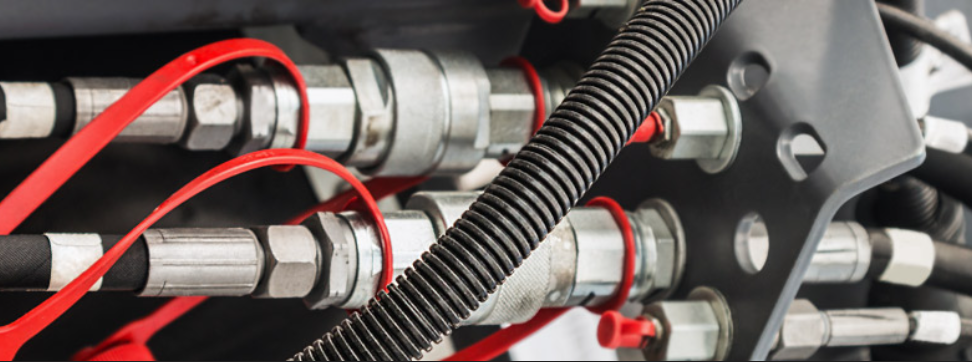
High-Pressure Quick Couplings & Custom Hydraulic Solutions
Optimizing Global Industrial Operations Through Advanced Fluid Connection Technology and Bespoke Engineering
What Are High-Pressure Quick Couplings?
A high-pressure quick coupling is a precision-engineered device designed to connect and disconnect fluid lines—carrying hydraulic oil, water, compressed air, fuel, or other media—under significant pressure without requiring tools. It replaces traditional threaded fittings, which are time-consuming to install and prone to cross-threading, with a mechanism that allows connection and disconnection in seconds. The coupling consists of two primary halves: the plug (male end) and the socket (female end). When joined, an internal locking system (using balls, latches, or sleeves) engages securely, while elastomeric seals (typically O-rings) compress to form a pressure-tight barrier.
Advanced designs incorporate dry-break or single coupling technology, where internal valves seal the fluid path before disconnection is complete. This minimizes spillage to mere droplets, protecting the environment, conserving expensive fluids, and preventing contamination ingress. These couplings are rated for specific pressure ranges (often from 3,000 to 10,000+ PSI) and must withstand harsh conditions including vibration, temperature extremes, and exposure to contaminants.
Core Benefits Driving Worldwide Adoption
Global Industrial Applications
High-pressure quick couplings are indispensable across virtually every sector that utilizes fluid power. Their ability to provide fast, reliable connections under demanding conditions makes them critical components in diverse applications around the world.
Construction & Heavy Machinery
Excavators, bulldozers, cranes, and compactors use couplings to quickly attach and detach breakers, grapples, augers, compaction wheels, and shears. This allows a single base machine to perform multiple functions on a job site, maximizing capital investment.
Agriculture & Forestry
Tractors, combines, harvesters, and skidders rely on couplings for implements like plows, planters, balers, sprayers, and harvest heads. Rapid changes enable farmers to adapt to different field tasks efficiently throughout the season.
Manufacturing & Factory Automation
Robotic arms, CNC machine tool changers, hydraulic presses, clamping fixtures, and assembly lines utilize couplings for quick die changes, end-effector swaps, and process reconfiguration, supporting high-mix, low-volume production.
Mining, Oil & Gas
Drilling rigs, hydraulic fracturing (fracking) pumps, slurry transport systems, and offshore equipment demand ultra-robust couplings capable of withstanding extreme pressures (15,000+ PSI), abrasive slurries, and corrosive environments.
Transportation & Material Handling
Garbage trucks, aircraft refueling systems, container handlers, and terminal tractors use couplings for safe, fast connection to hydraulic systems for lifting, compacting, and fluid transfer operations.
Test, Measurement & Research
Hydraulic test stands, wind tunnels, engine test cells, and research laboratories require couplings that provide reliable, repeatable, and leak-free connections to ensure accurate data collection and system validation.
The Strategic Advantage of Custom Hydraulic Solutions
While standardized couplings meet the needs of most applications, cutting-edge industrial challenges often require solutions beyond catalog specifications. Custom hydraulic solutions involve the collaborative design, engineering, and manufacture of coupling systems, hose assemblies, manifolds, and integrated fluid conveyance components tailored to unique application parameters. This bespoke approach is essential when facing exceptional operational demands.
When to Consider Custom Engineering
Several scenarios necessitate a custom solution: Extreme Operating Conditions beyond standard ratings (e.g., pressures above 20,000 PSI, temperatures from -65°F to +500°F); Specialized Media Compatibility requirements for chemicals, solvents, ultra-pure water, or food-grade fluids demanding specific seal and body materials; Unique Spatial or Geometric Constraints requiring non-standard bends, ultra-compact designs, or specific port orientations; Integrated Functionality Needs such as built-in pressure relief valves, temperature sensors, flow meters, or proprietary quick-release mechanisms; and Industry-Specific Certifications & Standards for sectors like aerospace (AS/EN standards), offshore (DNV/API), pharmaceuticals (FDA, USP Class VI), or food & beverage (3-A, EHEDG).
Material Selection: The Foundation of Reliability
The performance and service life of a coupling are fundamentally determined by its material composition. Body components are typically machined from carbon steel for high strength-to-cost ratio, stainless steel (304 or 316) for superior corrosion resistance in marine or chemical environments, or brass for non-sparking applications in potentially explosive atmospheres. Internal locking mechanisms use case-hardened or through-hardened steel for maximum wear resistance.
The seal is the most critical wear component. Standard Nitrile (Buna-N) seals work well with most petroleum-based hydraulic oils and water at moderate temperatures. Fluorocarbon (Viton®) is chosen for high-temperature applications and resistance to fuels, chemicals, and oils. For food, beverage, and pharmaceutical applications, FDA-approved materials like EPDM or Silicone are mandatory. The correct pairing of body material and seal compound ensures compatibility with the fluid media and operational environment, preventing premature failure and leaks.
Critical Safety Warnings and Mandatory Best Practices
MANDATORY SAFETY PROTOCOLS
Global Standards and Interchangeability
To ensure safety, reliability, and interchangeability across international supply chains, couplings are manufactured to recognized global standards. Thread standards define the physical connection interface and include ISO (Metric), prevalent worldwide; BSPP (British Standard Pipe Parallel), common in Europe and Asia; NPT (American National Pipe Tapered), standard in North America; and JIS (Japanese Industrial Standard). Beyond threads, the coupling profile—the shape and locking mechanism—must match for a proper connection. Widely adopted profiles include the ISO 16028 flat-face standard for minimal spillage and various established industrial interchange series (e.g., ISO 7241 Series B).
| Standard / Profile Type | Primary Geographic Region | Key Characteristics & Typical Use |
|---|---|---|
| ISO 16028 (Flat-Face / Flush-Face) | Global (Increasing Adoption) | Minimal fluid spillage & air inclusion, can often connect under residual pressure, high flow efficiency. Common in construction, agriculture, and industrial machinery. |
| ISO 7241-1 Series A & B | Europe, Global (Agriculture/Industrial) | Series B is a common agricultural/industrial profile with a ball-lock mechanism. Defines dimensions for interchangeability between manufacturers. |
| SAE J2044 (Agricultural Quick Couplings) | North America, Global Agriculture | Standardizes dimensions for the common "Pioneer" style one-way and two-way shut-off couplings used extensively in farming equipment. |
| Komatsu / Caterpillar / Volvo Profiles | Global (Heavy Equipment OEM) | Proprietary designs developed by major heavy machinery manufacturers for their equipment. Often require OEM-specific couplings for optimal performance. |
| MIL-C-27487 (Aerospace) | Global Aerospace & Defense | Military specification for high-performance couplings used in aircraft hydraulic and fuel systems, emphasizing lightweight and reliability. |
Engineer Your Hydraulic Success with Expert Solutions
Our global team of application engineers combines decades of experience in standard and custom high-pressure coupling solutions for every industry. We provide comprehensive technical support, from product selection to custom design and validation. Contact us today to discuss your specific requirements, request a product demonstration, or download our detailed technical manuals and safety guides.
Contact Our Global Engineering TeamEmail: sales@ehhydraulics.com | Worldwide Technical Support Network