How to Identify Hydraulic Quick Couplings
- Share
- Issue Time
- Nov 18,2026
Summary
Learn how to identify hydraulic quick couplings by type, size, and standard — with a quick visual checklist to match the right coupling.
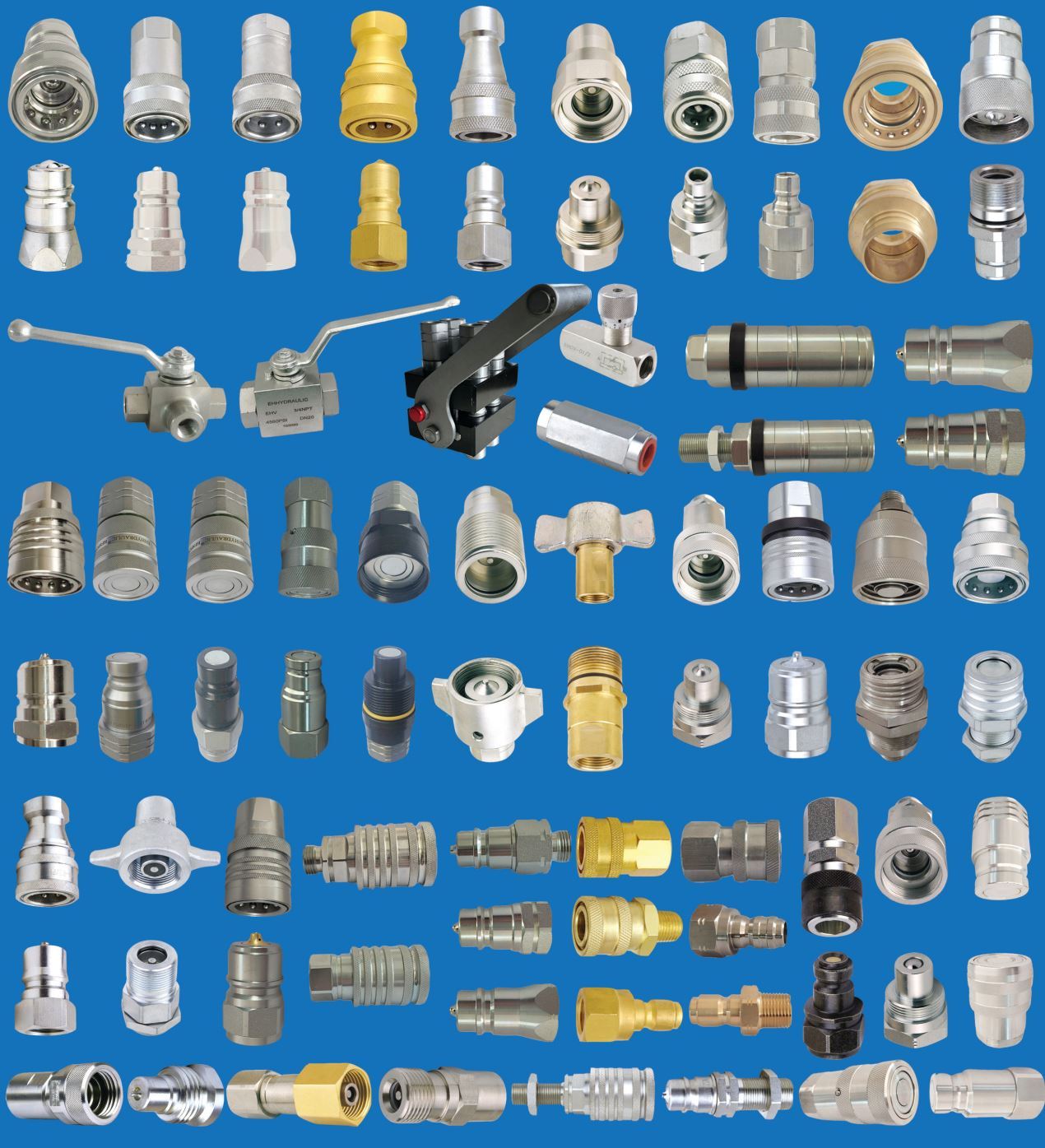
Hydraulic Coupling Selection Guide
Characteristics to Consider when Selecting Quick Couplings
The right quick coupling is selected by operating conditions, not by appearance. Before checking price or brand, define flow, pressure, fluid, temperature, interface standard, thread, material, sealing, spillage tolerance, vibration profile, and whether the line must connect under residual pressure. A coupling that matches the thread but fails on flow or pressure will still cause leaks, heat, downtime, and safety risks.
Quick couplings look simple, yet they sit at the most abused point of a hydraulic circuit: high pressure, repeated connect-disconnect, contamination, vibration, and temperature swing. For global buyers, OEM engineers, rental fleets, and maintenance teams, selection should follow a structured checklist rather than a catalogue part number.
The Core Selection Checklist
- Flow capacity and nominal bore – size by liters per minute, not by thread diameter.
- Working pressure, peak pressure, and impulse load – include pressure spikes, not just steady-state pressure.
- Fluid type and seal compatibility – mineral oil, synthetic fluid, water-glycol, phosphate ester, or emulsions.
- Temperature range – both media temperature and ambient temperature.
- Interface standard and interchangeability – ISO 7241-1 A/B, ISO 16028, ISO 5675, ISO 14540.
- Rear port thread – NPT, NPTF, BSPP, BSPT, SAE ORB, JIC, or metric.
- Body material and surface protection – carbon steel, stainless steel, brass, zinc, zinc-nickel.
- Spill control and contamination resistance – especially for mobile, outdoor, and clean-fluid systems.
- Locking mechanism – push-pull, ball lock, screw-to-connect, lever, or double shut-off.
- Residual pressure operation – can the operator connect safely without relieving the circuit?
1. Flow Capacity Comes Before Thread Size
The most common mistake is choosing a coupling because the rear thread matches the hose. Thread size is only the connection tail; the internal bore decides flow performance. An undersized coupling acts like a permanent orifice, raising velocity, pressure drop, oil temperature, and actuator response time.
Define the maximum continuous flow first, then review the pressure-drop curve at that flow. Two “3/8 inch” couplings from different series may perform very differently. Common nominal sizes include DN6, DN10, DN13, DN19, and DN25. For high-flow attachment circuits, size up; for low-flow handheld tools, avoid oversizing that adds cost and weight.
2. Pressure Rating Must Cover Real Operating Peaks
Rated working pressure is not the only number. Evaluate:
- Maximum steady working pressure
- Instantaneous peak pressure
- Impulse and shock loads from breakers, cylinders, steering, or loaders
- Burst pressure margin
- Pressure capability in connected and disconnected states
General push-pull poppet couplings typically cover moderate-to-high mobile duty. Flat-face couplings handle clean, frequent-connect circuits. Screw-to-connect couplings are better for high-pressure tools, residual pressure, vibration, and impulse-heavy equipment. Apply a safety margin above the highest expected system pressure rather than selecting exactly at the limit.
3. Fluid Compatibility and Seal Material
The body may survive the fluid, but the seal decides service life. Select the seal compound from the actual fluid datasheet:
- NBR: standard mineral-based hydraulic oil, general mobile and industrial use.
- FKM / Viton: high temperature, aggressive synthetics, and extended duty cycles.
- EPDM: phosphate esters, water-based fluids, and certain fire-resistant media.
- PTFE: chemical processing, extreme temperature, and aggressive fluids.
- HNBR: improved heat, abrasion, and bio-based fluid resistance.
Wrong seal selection causes swelling, hardening, cracking, leakage, and contaminant generation. Seals should also be checked for compatibility with additives, greases, cleaning agents, and ambient ozone or UV exposure.
4. Temperature Range
Temperature affects both elastomers and metal surfaces. Cold environments make standard NBR seals stiff and prone to cracking, while hot engine compartments accelerate seal aging. Stainless bodies, high-temp seals, and special platings may be required near exhaust systems, foundries, cold storage, or arctic sites.
Always define the minimum startup temperature, normal operating temperature, and short-term peak temperature. A coupling rated for 100°C average flow may still fail if shutdown heat soaks the manifold above the seal limit.
5. Interface Standard and Interchangeability
Interchangeability is defined by mating profile, not by body size alone. The major families are:
- ISO 7241-1 Series A: poppet-style, common in Europe, agriculture, forestry, and general mobile hydraulics.
- ISO 7241-1 Series B: widely used in North America and industrial systems.
- ISO 16028 flat face: low spillage, low air inclusion, easy cleaning, preferred for construction attachments.
- ISO 5675: agricultural tractor-to-implement interfaces.
- ISO 14540 / screw-to-connect: high-pressure, high-impulse, and residual-pressure applications.
Series A and Series B do not mate with each other, and neither mates with a flat-face half. “Standard compliant” also does not guarantee identical performance: two brands may share mating dimensions but differ in pressure rating, pressure drop, seal material, corrosion protection, and connect-under-pressure capability.
Fleet rule: standardize one series per size across compatible machines. Label couplers, document exceptions, and keep matching spare halves in stock. Mixed-brand fleets should standardize one series per size and label the machines.
6. Rear Thread and Port Connection
Thread mismatch is a frequent cause of cross-threading, leakage, and delayed assembly. Confirm both ends independently:
- NPT / NPTF: tapered threads common in North America.
- BSPP / BSPT: common in Europe, Asia, and Commonwealth markets.
- SAE JIC: 37° flare connection.
- ORB: O-ring boss, good vibration resistance.
- Metric: ISO 6149 or similar, common in European machinery.
- Flange: used for larger lines and high-pressure stationary equipment.
Check thread form, pitch, seal method, orientation, and clearance. A BSPP coupling forced into an NPT port may appear close but will never seal reliably.
7. Body Material and Corrosion Protection
- Carbon steel, zinc-plated: standard mobile and industrial hydraulics, best strength-to-cost.
- Zinc-nickel steel: improved salt-spray and corrosion resistance.
- Stainless steel 304 / 316: marine, chemical, food, washdown, and offshore service.
- Brass: low-pressure water, air, or compatible specialty fluids.
- Hardened steel: high-pressure threaded couplings and impulse duty.
For coastal or chemical environments, request salt-spray test data. For food and pharmaceutical systems, validate material certification and cleanability. Material choice should follow the worst-case environment, not the average one.
8. Spillage, Air Inclusion, and Contamination Control
Every disconnect releases some fluid and can draw in air or debris. The amount matters in three situations:
- Environmental compliance and spill-sensitive job sites.
- Clean hydraulic systems with servo valves or precision pumps.
- Dusty, muddy, or outdoor agricultural and construction duty.
Flat-face couplings give near-zero spill, minimal air ingestion, and a surface that can be wiped before connection. Poppet couplings are cost-effective but may retain fluid in the cavity. Dust caps are not accessories; they are protective components that prevent grit from entering the circuit on the next connection.
9. Locking Mechanism and Vibration Resistance
The locking style affects safety, ergonomics, and accidental-disconnect resistance:
- Push-pull sleeve: fastest operation, ideal for low-vibration tool changes.
- Ball lock: robust general-purpose retention.
- Screw-to-connect: best for high pressure, residual pressure, and severe vibration.
- Lever lock: positive mechanical retention for heavy equipment.
- Double shut-off: both halves seal on disconnect for cleaner breaks.
Breakers, hammers, excavator attachments, and mining tools need mechanical retention and impulse resistance. A coupling that unlocks under vibration can release pressurized fluid unexpectedly.
10. Connection Under Residual Pressure
Standard push-type couplings are not designed to connect against trapped pressure. On warm machines, thermal expansion can leave pressure in the line even after the pump stops. If operators must connect live, select couplings engineered for connect-under-pressure and confirm which half carries the function.
Screw-to-connect designs overcome residual pressure mechanically. Some flat-face or specialized profiles also support controlled connection, but this must be specified explicitly rather than assumed.
11. Maintenance, Serviceability, and Total Cost
Couplings are low-cost components with high downtime potential. Evaluate spare seal kits, availability of matching halves, replacement frequency, batch traceability, and supplier technical support. For OEM programs, digital batch codes, QR identification, and consistent dimensional testing reduce misordering.
A cheaper coupling with poor seal life, unknown plating, or unclear interchange data often costs more over three years than a properly specified component.
12. Application-Based Shortcuts
- Agriculture: ISO 7241-A poppet or ISO 5675, NBR seals, dust caps, BSP/NPT tails.
- Construction attachments: ISO 16028 flat face, zinc-nickel steel, high flow, low spill.
- Breakers and hammers: screw-to-connect, hardened steel, impulse-rated seals.
- Marine and offshore: stainless 316, FKM or EPDM, certified threads, corrosion validation.
- Food and chemical: stainless body, PTFE/EPDM seals, cleanability, material certification.
- Test benches: low pressure drop, frequent connect-disconnect, clear marking, spare seals.
Final Buying Specification Template
Send suppliers the following data to receive an accurate mating set:
- Max flow rate (L/min or GPM)
- Working pressure and peak pressure
- Fluid type and additive package
- Media and ambient temperature range
- Coupling interface standard and series
- Body size / nominal bore
- Rear thread type and seal style on both ends
- Body material and surface finish
- Seal material preference
- Required spill class and contamination level
- Vibration, impulse, and shock conditions
- Whether connect-under-pressure is required
- Quantity, spare-half strategy, and certification needs
Selecting a quick coupling is not a fast commodity purchase. The component controls flow, contains pressure, protects fluid cleanliness, and determines how safely an attachment or tool can be changed. Specify by engineering conditions first, then validate interchange, quality, and supplier support.
Note: Always confirm ratings, dimensions, and certifications against the manufacturer’s current catalogue and the installed equipment nameplate before ordering.