Hydraulic Quick Coupler Standardization: Audit & Conversion Plan
- Share
- Issue Time
- Sep 28,2026
Summary
Audit your mixed fleet, select one coupler standard, and convert machines without downtime. A field-tested hydraulic quick coupler standardization process.
Hydraulic Quick Coupler Standardization: Audit & Conversion Plan
Fleet Maintenance & Hydraulic Interfaces · Global Edition · 9 min read
Standardizing hydraulic quick couplers across a mixed fleet is an audit-first, phase-by-phase conversion project, not a single purchasing decision. Document every connection point, group machines and attachments by real hydraulic demand, write one approved specification per group using the S.T.A.M.P. method, then convert in controlled phases and lock the standard into every future equipment purchase. Fleets that follow this sequence cut changeover time, eliminate adapter clutter, and stop guessing which attachment fits which machine.
Key takeaways up front
- Standardization does not mean one identical coupler on every machine; it means fewer, documented interfaces matched to verified duty requirements.
- A complete audit is non-negotiable: profile, body size, thread, port configuration, flow, pressure, media, temperature and connection frequency.
- Physical interchangeability is not performance compatibility — a coupler can mate perfectly and still restrict flow, generate heat or fail under pressure impulses.
- Five proven conversion paths exist: direct interchange, flat-face ISO 16028, connect-under-pressure, multi-coupling plates, and engineered interfaces.
- Write the approved interface into acquisition specs, or every new machine reintroduces variation.
Why mixed fleets drift into coupler chaos
A fleet rarely becomes complicated overnight. Machines are purchased from different manufacturers, attachments arrive from several suppliers, and worn connections get replaced with whatever the local distributor has on the shelf. Over time the same yard can hold three or four coupler profiles, two or three body sizes, a handful of thread standards and several different connection procedures — all on equipment that operators expect to share the same tools.
The cost shows up in predictable places: longer attachment changeovers, a drawer full of one-off adapters, duplicate replacement inventory, crossed hydraulic lines, and the persistent uncertainty of whether a given attachment can be connected to a given carrier. Rental fleets, municipal equipment groups and contractors running multiple crews feel it most, because the same attachment may need to move between machines, branches and job sites in a single week.
The fix is not a blanket swap. A skid steer, a high-flow excavator attachment, a snow-removal vehicle and an industrial test stand place very different demands on the connection. The objective is to reduce unnecessary variation while preserving the specifications each application needs in order to operate safely and reliably.
Step 1: Build an accurate baseline audit
Start with a record for every carrier machine and attachment, including equipment that moves among branches, job sites or rental locations. The audit should show which connections already work together, which require adapters, and which create repeated service or changeover problems. Part numbers and equipment manuals supply part of the picture; worn markings and undocumented repairs supply the rest, so plan for hands-on inspection.
- Machine and attachment identity: model, serial number, owning branch or crew, and which tools it is expected to share.
- Coupler profile: current interchange profile of both halves — never assume the mating half matches.
- Body size and face diameter: measured, not estimated, because similar-looking bodies can differ by a fraction of a millimetre.
- Thread and port configuration: thread type, pitch, port standard and seal form.
- Flow rate: nominal and peak flow through the circuit.
- Pressure: maximum working pressure plus peak pressure and pressure impulses, reviewed separately.
- Media, seal and temperature: hydraulic oil type, seal material compatibility, ambient and fluid temperature range.
- Operating environment: dirt, mud, washdown, road salt, corrosive media, vibration and exposure to sunlight.
- Connection frequency: how often the circuit is connected and disconnected per shift, week or season.
- Recurring symptoms: leaks, difficult hookups, excessive heat, pressure drop, contamination or premature wear.
How to identify an unknown coupler
Identification confirms what is installed today; application review determines what should be installed tomorrow. When markings are worn or the profile is unknown, narrow the coupler type using its face, body and measurements against a physical identification chart, and capture clear photos of the coupler face, side profile, threads and the complete hose connection. Photos, part numbers and symptom notes together give a hydraulic specialist enough to classify the connection without a site visit.
Separate "restore" from "redesign"
Some connections only need a like-for-like replacement to end a leak or a worn locking mechanism. Others signal a deeper mismatch: undersizing, trapped pressure, hose movement, an unsuitable seal material, or a connection procedure that needs to change. Tag every audited point as replace in kind, re-specify, or engineer — that single column in your audit spreadsheet will drive the entire conversion budget.
Step 2: Group equipment by genuine hydraulic demand
After the audit, organize machines and attachments into groups with comparable hydraulic requirements. Grouping should reflect which assets genuinely need to share attachments and replacement parts — not simply which assets share a paint colour or a manufacturer. Useful grouping criteria include carrier class, attachment type, flow range, pressure range, duty cycle and connection method.
| Grouping lens | What to compare | Why it matters |
|---|---|---|
| Carrier class | Skid steers, compact excavators, mid-size excavators, municipal trucks | Determines typical body size and mounting space |
| Attachment type | Breakers, augers, grapples, snow blowers, brooms | Severe-duty tools drive impulse and flow requirements |
| Flow range | Standard flow vs. high-flow vs. auxiliary low-flow circuits | Prevents a coupler from becoming the system restriction |
| Pressure range | Working pressure, peak pressure, impulse frequency | Protects against fatigue failures on demolition-duty circuits |
| Duty cycle & frequency | Changes per shift, seasonal storage, multi-crew use | Sets wear expectations, locking requirements and capping discipline |
| Connection method | Single line, multi-line, manual, guided plate | Decides whether a multi-coupling plate is justified |
Confirm both halves of every connection and every adapter already in the circuit before you assign an approved specification. An adapter hidden inside a hose assembly is the most common reason a "standardized" machine still fails to connect.
Step 3: Write an approved specification with S.T.A.M.P.
The S.T.A.M.P. coupling selection method gives every group a repeatable requirement structure: Size, Temperature, Application, Materials or media, and Pressure. For fleet standardization, treat it as the foundation of a permanent specification sheet rather than a one-time purchasing checklist.
| S.T.A.M.P. factor | What the fleet standard must state |
|---|---|
| Size | Approved interchange profile, body size, thread and port options |
| Temperature | Ambient and fluid temperature limits, including sun-loaded attachments |
| Application | Duty cycle, connection frequency, residual-pressure behaviour, flat-face requirement |
| Materials / Media | Coupler material, seal compound, corrosion and contamination exposure |
| Pressure | Working pressure, peak pressure, impulse rating, and flow capacity at actual system flow |
Sizing rule that saves the most rework: review coupler sizing at the system's actual flow rate, not at the nominal port size. Pressure drop across a coupler rises sharply with flow, and a restricted connection converts that loss into heat, slower attachment response and higher pump load. A coupler that mates physically can still be hydraulically wrong.
Each fleet standard should also document whether the application requires flat-face performance for clean breaks, connection under residual pressure, a secondary locking mechanism, or a multiple-line connection. State the limits explicitly so that a future buyer — or a technician at a remote branch — cannot choose by appearance alone.
Step 4: Choose the right conversion path per group
Once operating requirements are clear, select a consistent connection path for each group. Several paths can coexist inside one organization; the error is letting them coexist inside one equipment group.
Direct interchange
Appropriate when the existing interface already supports the required flow, pressure and operating conditions. Even here, publish the approved list: accepted profiles, sizes, threads and performance limits, so replacements stay consistent for the life of the machine.
Flat-face couplers (ISO 16028)
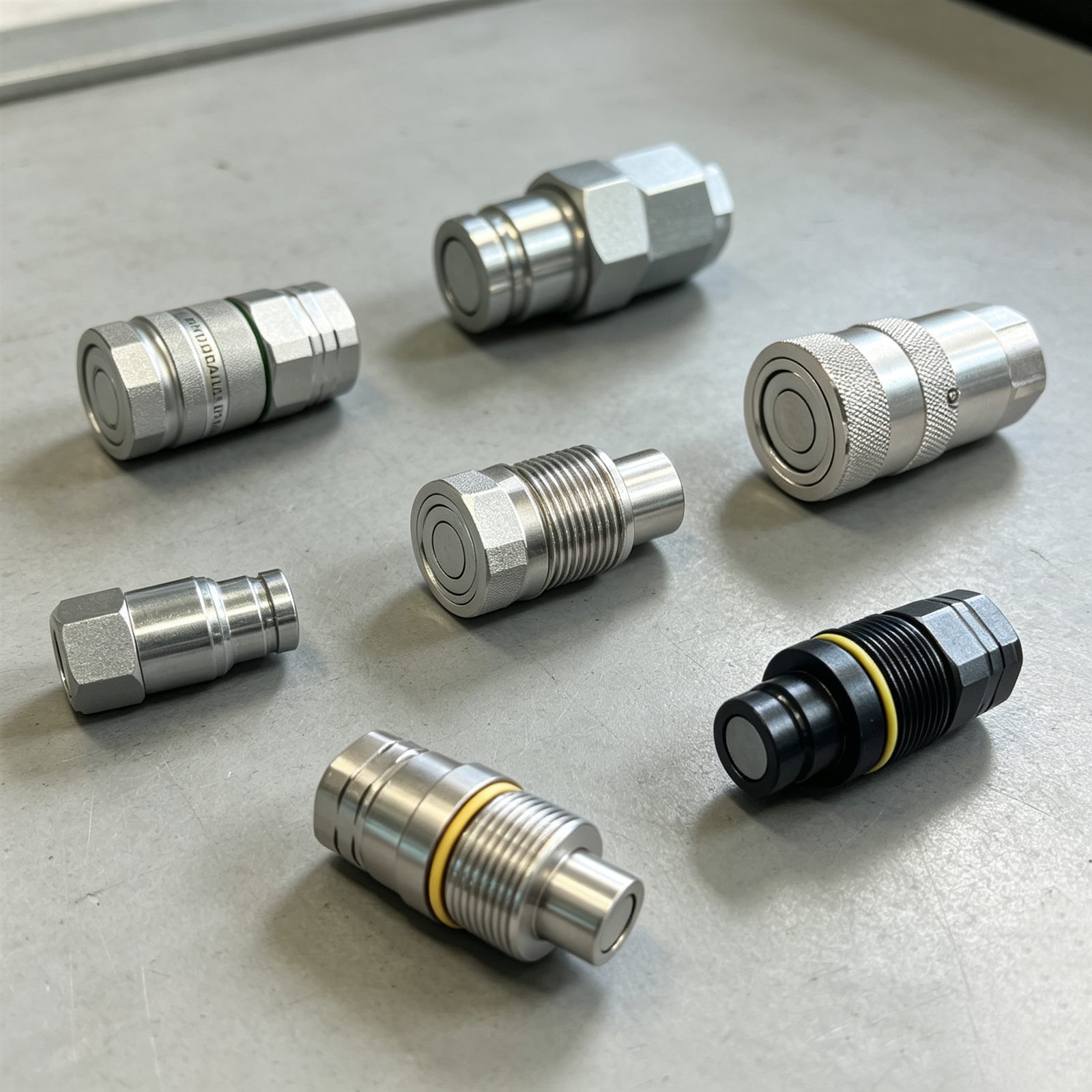
Flat-face designs support clean attachment changes and cross-brand interchangeability when both halves follow the same ISO 16028 profile and size. They reduce fluid loss, limit contamination ingress and are easier to wipe clean before connection — a real advantage in muddy, dusty or washdown environments. Interchangeability alone does not guarantee performance, so still verify flow capacity, pressure rating and residual-pressure behaviour.
Connect-under-pressure couplers
Attachments that sit in the sun or hold trapped fluid develop residual pressure that makes reconnection difficult or impossible. When operators report pressure-lock repeatedly, evaluate connect-under-pressure couplers for that specific machine and attachment group — and define a written procedure for how operators recognize and respond to a pressure-locked connection.
Multi-coupling plate systems
When operators routinely connect several hydraulic lines, when attachments also need electrical, pneumatic or other media, or when crossed lines and inconsistent engagement cause downtime, a guided multi-coupling plate creates a repeatable connection arrangement. Size and engineer the plate for the number of circuits, media types, flow, pressure, residual pressure and available mounting space.
Engineered or OEM design-in interfaces
Mounting constraints, unusual machine layouts, multiple circuits or new equipment platforms may need a custom plate, bracket or OEM review. Separate these from routine replacement work and document them as controlled configurations, complete with drawings and part numbers in the fleet registry.
Step 5: Convert in phases and lock it into purchasing
An immediate fleetwide conversion is rarely necessary and often counterproductive. A phased plan lets you validate performance, manage inventory and avoid taking too much equipment out of service at once.
- Pick a pilot group: a high-use equipment class or the connection that causes the most repeated problems.
- Confirm performance in the field against the audit baseline — changeover time, leak calls, heat complaints, adapter usage.
- Convert the next group during scheduled service, hose replacement or planned attachment maintenance to avoid dedicated downtime.
- Retire adapters deliberately, and record which legacy attachments need a documented conversion kit.
- Add the approved hydraulic interface to acquisition specifications for every new machine and attachment.
Before delivery of any new machine, compare the manufacturer's connection details with the fleet standard and confirm compatibility with the attachments the machine is expected to use. If the new equipment cannot follow the existing standard, document the exception and approve the required adapter, auxiliary kit, coupler conversion or custom interface before the machine enters service — then update the fleet registry, replacement-parts list and operator instructions accordingly.
Standardize the human layer: procedures and training
Consistent components only deliver consistent results with consistent handling. Operator and maintenance procedures should cover shutdown, pressure relief, cleaning, inspection, connection, disconnection, capping and storage — plus what to do when a coupler will not connect, leaks after engagement, or shows visible damage.
This operating layer matters most for rental fleets, municipal groups and multi-crew contractors. Clear procedures reduce improvisation and make it far easier to distinguish a damaged component from a sizing, pressure or compatibility problem — which is what stops the same coupler from being replaced three times for the same root cause.
Maintain the standard as a living fleet record
Treat the specification list as a maintained record, not a project deliverable. Review it when equipment is acquired, when attachments are transferred between branches, when recurring failures appear, or when operating requirements change. Replacement history, service reports and operator feedback reliably show where the standard is working and where an application needs further review.
When your team does not have every measurement — a worn face, an unmarked body, an undocumented adapter — submit photos, drawings, measurements and application details to a technical help desk. Flow rate, working pressure, equipment model, attachment type and a short description of the problem give a hydraulic specialist a useful starting point.
Frequently asked questions
Does standardization mean one coupler for the whole fleet?
No. It means one documented, approved interface per equipment group. A high-flow excavator circuit and a low-flow auxiliary circuit legitimately need different body sizes and performance ratings.
Can we keep using adapters instead of converting?
Adapters are acceptable as a documented, temporary bridge. Each one adds a leak point, a pressure-drop point and an inventory item, and hides the fact that the fleet still lacks a standard.
Where should a pilot conversion start?
Start with the highest-use group or the connection generating the most service calls, so results are measurable against the audit baseline within a single maintenance cycle.
When is a multi-coupling plate worth the investment?
When operators connect several lines at every changeover, when electrical or pneumatic media are also required, or when crossed lines are a recurring cause of downtime.
Where to start this quarter
Open a spreadsheet and audit one equipment group this week: machine, attachment, profile, body size, thread, flow, working and peak pressure, media, seal, temperature, environment and connection frequency. Identify the single connection causing the most lost time, write a S.T.A.M.P. specification for it, and convert that group first. Accurate connection data — carried through product selection, conversion and ongoing maintenance — is what turns a mixed fleet into a predictable one.
Every fleet has a different mix of machines, attachments, duty cycles and hydraulic requirements. A consistent standardization plan simplifies replacement decisions, shortens training and makes attachment changeovers reliable across equipment groups.