Hydraulic Quick Coupler Types Explained
- Share
- Issue Time
- Oct 26,2026
Summary
A hydraulic quick coupler connects or cuts hydraulic power in seconds — no tools, no draining the system. But the term describes two unrelated parts: hose couplings that join fluid lines, and excavator couplers that swap attachments。
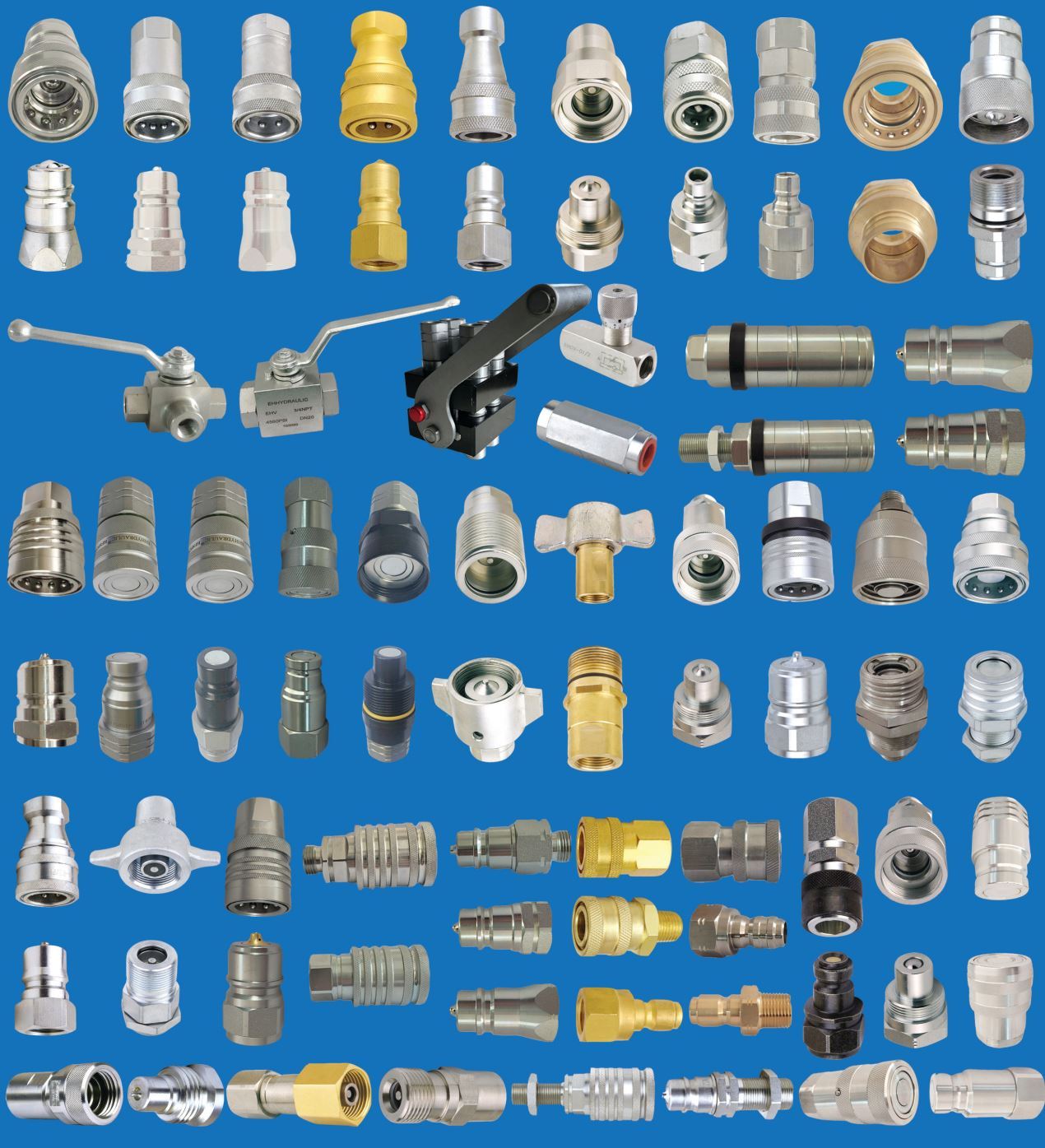
Hydraulic Quick Coupler Types Explained: Valve Designs, Connection Styles and ISO Standards
By the Ehhydraulic Couplings Editorial Team | Updated 26 October 2026 | 9 min read | Categories: Hydraulic Quick Couplers, Mobile Hydraulics, Fluid Power
A hydraulic quick coupler is the small component that decides whether an operator changes an attachment in ten clean seconds or in ten dirty minutes. It lets two fluid lines be joined and separated by hand, without tools and without draining the circuit. But "quick coupler" is not one product: it is a family. There are four valve designs (poppet, ball, flat face and free flow), five connection mechanisms (push-to-connect, screw-to-connect, sleeve retraction, push-pull and multi-coupling plates), and at least four ISO interface standards that do not intermate. This guide explains every type from the top down, shows which one belongs on your machine, and gives you the selection checklist engineers actually use.
Key takeaways
- Two classification axes matter: the valve (how flow is sealed) and the locking mechanism (how the halves are joined).
- Poppet valves are the economical all-rounder; flat face (ISO 16028) is the clean, near-zero-spill standard for modern construction equipment.
- Screw-to-connect couplings handle residual pressure, vibration and pressure spikes on breakers and demolition tools.
- ISO 7241-1 Series A and Series B do not connect to each other — check the interface before you order, not after.
- Size by flow rate, not by thread size. An undersized coupler is a bottleneck that turns energy into heat.
- Multi-coupling plates connect many lines at once, under residual pressure, and make wrong connections physically impossible.
What is a hydraulic quick coupler?
A hydraulic quick coupler — also called a quick disconnect, quick-release coupling or quick connect — is a precision pair of halves: a female body (coupler) and a male plug (nipple). Inside the female body, a ring of locking balls or a detent grips a groove machined into the male tip; sliding the sleeve back releases it. Each half carries a spring-loaded valve that closes the instant the halves separate, which is what stops the circuit emptying onto the ground every time a hose comes off [citation:1].
Because both halves seal independently, a well-specified coupler delivers four things at once: tool-free connection, minimal fluid loss, minimal air inclusion and protection against contamination. Get one wrong and the symptoms appear downstream as slow cylinders, hot oil, pump wear and downtime [citation:26].
Two ways to classify: valve type and connection method
Most buying mistakes come from mixing up two independent questions: how the flow is shut off (valve type) and how the halves are locked together (connection method). Every coupler is described by one answer to each — for example, "flat-face valve, push-to-connect" or "poppet valve, screw-to-connect" [citation:1].
- Valve types: poppet, ball, flat face, free flow (no valve).
- Connection types: push-to-connect, screw-to-connect, sleeve retraction, push-pull, multi-coupling.
The four valve types explained
1. Poppet valve couplers — the workhorse
The poppet valve is the most basic and most widely installed shut-off system: a spring-loaded cone seats against a machined bore and lifts off its seat only when the halves are mated. Poppet designs deliver high mechanical resistance, high sealing reliability and low risk of seal extrusion, and modern poppet seals resist flow reversal while keeping pressure loss low — critical, because pressure drop is wasted energy [citation:1]. Typical applications are agricultural machinery, oil tools, forestry equipment and general industrial circuits, including the 75, 73, 66, 81,82,83,86, and 91 series [citation:1].
- Pros: lowest cost, huge interchange base, robust metal-to-metal sealing with an auxiliary elastomer.
- Cons: a few drops of oil lost per disconnect, a small amount of air admitted into the circuit, and a recessed face that traps dirt if the dust cap is missing [citation:22].
- Standards: ISO 7241-1 Series A and Series B are both poppet profiles [citation:14].
2. Ball valve couplers — simple and economical
Instead of a poppet cone, a spring-loaded ball seals against the seat. When the halves are joined, the two balls push against each other and lift off their seats. Ball-type couplings are common on lower-pressure circuits, general-purpose tools and older equipment, mainly because they are cheap and widely stocked [citation:22].
- Pros: economical, simple, available everywhere.
- Cons: the ball sits in the flow path, so pressure drop is higher than in a flat-face design of the same size; spillage and air inclusion are moderate; corrosion resistance on low-cost units is often poor [citation:26].
3. Flat face couplers — near-zero spillage (ISO 16028)
Flat face (flush-face) couplers are the fastest-growing family. The two mating surfaces are flush and wipe against each other before the ports open, so virtually no oil escapes on disconnect and almost no air enters on connect. The flat surface is also easy to clean, so dirt is not pushed into the system — which is exactly how expensive pumps fail [citation:1]. ISO 16028:2023 covers flush-face couplings for 10 MPa to 31.5 MPa (100–315 bar), depending on size, and requires automatic sealing on both sides when disconnected [citation:12]. Note: standard ISO 16028 couplings are not designed to be connected or disconnected under pressure [citation:12].
- Pros: near-zero spillage, minimal air inclusion, easy-clean face, larger effective flow path and lower pressure drop than poppet designs, better resistance to contamination [citation:26].
- Cons: higher unit price; the sealing face is exposed to impact damage; residual pressure can make connection difficult unless the series is rated for connect-under-pressure.
- Brinelling resistance: high-frequency impulse pressures can brinell (dent) the locking elements and mating surfaces. Flat-face ranges therefore offer features such as a sector latching system specifically engineered to counter this effect on high-impulse circuits [citation:1].
- Typical use: skid steer loaders, excavator attachment lines, hydraulic breakers and hammers, forestry machines, municipal equipment and hydraulic rescue tools [citation:9].
4. Free-flow couplers — no valve at all
Some circuits must never be blocked: cooling loops, low-pressure return lines, test benches and certain lubrication or transfer lines. Free-flow couplings have no shut-off valve, giving an unrestricted passage with the lowest possible pressure drop [citation:1].
- Pros: maximum flow, minimal pressure loss, simple construction.
- Cons: the line will drain when disconnected, so they are only suitable where spillage is acceptable and the circuit does not require sealing.
Connection and locking mechanisms: five ways to join the halves
Push-to-connect
The dominant mechanism across mobile hydraulics: retract the sleeve, push the male tip in, release, and the locking balls drop into the groove — genuinely one-handed, which is what an operator wearing gloves in mud needs [citation:1]. The classic failure mode is not a broken coupler but trapped residual pressure: heat expansion or a load left on the circuit makes the halves impossible to push together. Relieve pressure at the control lever or via the machine's auxiliary relief before forcing anything.
Screw-to-connect (threaded flat face)
Also called threaded flat-face couplers, these are screwed together by hand rather than pushed. The threaded collar resists bending loads and eliminates premature wear, which is why this design is specified where impulse pressure and vibration would destroy a push-fit coupling [citation:1]. ISO 14540:2013 defines the interface for screw-to-connect quick-action couplings used with high-pressure hydraulic tools [citation:30].
- Best for: hydraulic breakers, demolition attachments, rock drills, high-pressure tools and heavy-duty construction circuits.
- Key advantage: many threaded designs can be connected with residual pressure in the line — a decisive benefit when a hot attachment returns to the yard with trapped pressure [citation:27].
- Trade-off: slower to connect than a push fit, so it is a poor choice for machines that swap attachments every few minutes.
Sleeve retraction
Here the operator pulls the sleeve back (rather than pushing the plug forward) to release the locking elements. It is often used where the coupler is mounted in a confined block or manifold and there is no room to push a hose forward — common on compact machinery and on multi-plate bodies [citation:1].
Push-pull
Push-pull couplings connect by pushing and disconnect by pulling the body itself, with no sleeve to find — ideal for one-handed, gloved operation. This is the classic pattern on tractor and implement hydraulics, where an implement may drift away and the line must part safely rather than rip a hose off the machine [citation:24].
Multi-couplings
When an attachment has four, six or eight hydraulic lines, individual couplers become a productivity and safety problem: the risk of a cross-connected line rises with every hose. A multi-coupling plate solves both at once — one ergonomic lever connects every line simultaneously, even with residual pressure in the system, and the plate layout makes a wrong connection physically impossible [citation:1]. Plates can also integrate electrical connectors alongside the hydraulic circuits [citation:1].
ISO standards at a glance
Interface standards exist so that a coupler from one manufacturer mates with a coupler from another. That is the whole reason interchange works — and the reason you must specify the standard, not just the body size [citation:3].
| ISO 7241-1 Series A | Poppet, push-to-connect | Predominantly Europe; agriculture and forestry worldwide | Mates only within Series A; interchanges with Parker 6600, Ehhydraulic 75/73/66, Faster ANV/NV, Aeroquip FD56, Hansen HA 15000 [citation:2] |
|---|---|---|---|
| ISO 7241-1 Series B | Poppet, push-to-connect | Predominantly North America; industrial and chemical applications | Mates only within Series B; interchanges with Parker 60,Ehhydraulic 81/82/83, Faster HNV, Aeroquip FD45, Snap-Tite 72 [citation:14] |
| ISO 16028 | Flat face / flush face, 10–31.5 MPa | Construction equipment, skid steers, excavators, forestry | Standard couplings are not intended for connection under pressure [citation:12] |
| ISO 5675 | Agricultural general-purpose couplers | Tractor-to-implement hydraulic power transfer | Male tip dimensions follow ISO 7241 Series A sizes (12.5 mm and 20 mm) [citation:13] |
| ISO 14540 | Screw-to-connect | High-pressure hydraulic tools | Not a universal standard for every threaded or high-pressure coupling [citation:30] |
Two warnings follow from this table. First, Series A and Series B do not connect to each other, and neither mates with an ISO 16028 flat-face half; use a purpose-built adapter when two machines must share a line across standards [citation:3]. Second, interchangeability is not performance equality: products can share mating dimensions and still differ in working pressure, pressure drop, seal compound, corrosion protection and connect-under-pressure capability [citation:30]. ISO 5675:2021 additionally sets operating limits for agriculture — a maximum pressure drop of 0.35 MPa at 45 L/min for the 12.5 mm size, disconnect fluid loss of no more than 4.0 ml, and a valve opening force not exceeding 45 N [citation:13].
How to choose: a seven-step checklist
- Size by flow, not by thread. Nominal body size is a size family, not the actual bore. Compare pressure-drop curves at your circuit's real maximum flow — a 3/8 in coupler may flow only about 4 gpm at 20 psi backpressure while the hose flows double that [citation:26].
- Pressure: working, peak and impulse. Select a rating comfortably above the highest expected pressure including spikes; never select on burst pressure [citation:30]. High-impulse circuits justify a screw-to-connect or brinelling-resistant flat-face design [citation:1].
- Temperature and media. Match seal compound to fluid and temperature: NBR for mineral oil, FKM for high temperature and synthetics, EPDM for phosphate-ester fluids [citation:27].
- Body material and finish. Carbon steel with zinc or zinc-nickel plating for standard mobile hydraulics; stainless steel for marine, washdown and chemical duties; brass for compatible low-pressure or specialty fluids [citation:29].
- Spillage expectations. If oil on the ground means an environmental incident or a contaminated workshop, choose flat face [citation:9].
- Residual pressure. If operators must connect while pressure is trapped, specify a series rated for connect-under-pressure and confirm which half carries the function [citation:30].
- Fleet strategy. Standardise the interface across compatible machines, keep common spare halves in stock, and document every adapter or exception [citation:29].
Which type for which industry?
- Agriculture: ISO 7241-1 Series A poppet or push-pull couplings on tractor remotes, with ISO 5675 governing the tractor-to-implement interface [citation:13].
- Construction: flat face ISO 16028 for attachment circuits; screw-to-connect for breakers and high-impulse lines [citation:1].
- Forestry: flat face, because a wipe-clean face and low spillage suit dusty, environmentally sensitive sites [citation:1].
- Mining and heavy industry: screw-to-connect flat face and brinelling-resistant locking for vibration and continuous impulse loading.
- Rental and mixed fleets: standardise on ISO 16028, add connect-under-pressure where attachments return hot, and keep dust caps fitted [citation:29].
- Multi-line attachments: multi-coupling plates with flat-face valves and optional electrical connectors [citation:1].
Five failure modes that shorten coupler life
- Brinelling: high-frequency impulse pressures dent locking elements and mating surfaces, making connection stiff and eventually impossible. Counter it with sector-latching flat-face designs and correct pressure rating [citation:1].
- Seal extrusion and wear: pressure spikes beyond the rating, or temperatures outside the seal compound's range, destroy the elastomer long before the steel body fails.
- Contamination: a missing dust cap lets grit sit on the open face and be injected straight into the pump on the next connection [citation:25].
- Mismatched halves: halves from different makers — even both "ISO compliant" — can differ in tolerance and cause premature seal wear or blow-out under load [citation:27].
- Thread mismatch: forcing NPT into BSPP or SAE ORB ports causes micro-leaks and stripped threads. Verify the port thread separately from the coupler interface [citation:27].
Simple maintenance that pays for itself
- Wipe both faces clean before every connection; replace damaged dust caps and plugs immediately.
- Relieve pressure through the approved procedure before connecting; never crack a fitting to bleed a line.
- Inspect seals for cuts, flattening and hardening at every service interval; keep the correct rebuild kit for your standard and size.
- Log disconnect effort, visible seepage and coupler temperature — changes are early warnings worth investigating [citation:25].
- Never search for a hydraulic leak with your hand. Pressurised fluid injection is a surgical emergency [citation:23].
Frequently asked questions
Are all hydraulic quick couplers interchangeable?
No. Interchangeability is defined by the interface standard and the nominal size. ISO 7241-1 Series A, ISO 7241-1 Series B, ISO 16028 and ISO 5675 are distinct families that do not intermate — an ag tip will not seat in a flat-face sleeve [citation:3]. Use a dedicated adapter when two machines must share a line.
What is the difference between flat face and poppet couplers?
A poppet coupler uses spring-loaded cones that seal inside each half; it is economical but loses a little fluid and admits a little air at each disconnect. A flat-face coupler brings two flush faces together before the ports open, giving near-zero spillage, minimal air inclusion, a wipe-clean surface and a larger flow path with lower pressure drop — at a higher purchase price [citation:22][citation:26].
Can I connect a coupler while the line still holds pressure?
Standard ISO 16028 flat-face couplings are not designed for connection or disconnection under pressure [citation:12]. If attachments regularly return with trapped pressure, specify a series rated for connect-under-pressure and confirm which half carries the function [citation:30].
How do I size a hydraulic quick coupler?
By flow capacity and acceptable pressure drop, not by hose thread size. Check the pressure-drop curve at your circuit's maximum flow; high-flow attachments often need a 5/8 in or 3/4 in body rather than a default 1/2 in [citation:29].
When should I use a screw-to-connect coupler?
On high-pressure, high-vibration, high-impulse circuits such as hydraulic breakers, demolition attachments and rock drills, and wherever residual pressure must be tolerated. The threaded collar resists bending and vibration but is slower to connect, so avoid it on machines that change attachments very frequently [citation:1][citation:27].
When is a multi-coupling system worth the investment?
When an attachment carries several hydraulic lines. The lever connects them all at once, even under residual pressure; the plate layout prevents cross-connection; integrated flat-face valves prevent spillage; and electrical connectors can be built into the same plate [citation:1].
The bottom line
There is no universally "best" hydraulic quick coupler — only the right one for a given circuit. Start from the duty cycle: how often it is connected, under what pressure, with how much flow, in how much dirt, and by whom. Then match valve type, locking mechanism and ISO interface to those answers. Whether you need a poppet coupling for an agricultural implement, a zero-spill flat-face coupling for an excavator attachment, a screw-to-connect coupling for a breaker, or a multi-coupling plate for a complex attachment, the specification work is the same — and it pays back in fewer leaks, Ehhydraulic attachment changes and longer component life.
Need help specifying? Share your flow rate, working and peak pressure, fluid, temperature, port threads and duty cycle with our application team, and we will match the right valve design, locking mechanism and ISO interface to your machine — including connect-under-pressure and multi-coupling solutions.