Hydraulic Quick Couplers for Aviation Testing & OEM Applications
- Share
- Issue Time
- Apr 28,2026
Summary
Durable hydraulic quick couplers designed for aviation testing systems and OEM applications. Ensure fast, leak-free connections for high-pressure environments.
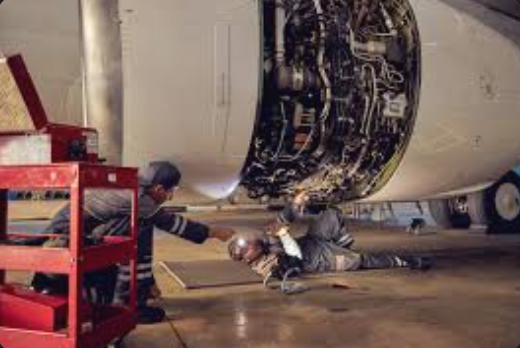
Hydraulic Quick Couplers for Aviation Testing & OEM Applications
Ensuring Safety, Efficiency and Reliability in Aircraft Hydraulic System Testing
The Critical Importance of Hydraulic Testing in Aviation
Aircraft hydraulic systems are responsible for operating flight controls, landing gear, brakes, and numerous other critical functions. The aeronautics industry faces the dual challenge of producing aircraft that meet stringent safety standards while maintaining operational efficiency and preventing unscheduled downtime . Testing hydraulic systems during production, ground support, and maintenance processes is essential to achieving these objectives. According to industry experts, hydraulic fluid contamination can lead to serious aviation safety issues, in-flight problems, and damage to expensive aircraft components .
The testing process encompasses all types of aircraft including commercial airliners, private planes, military aircraft, helicopters, rockets, and drones. Connecting aircraft to hydraulic power units requires specialized quick disconnect couplers that provide self-sealing, leak-free connections to avoid safety issues and prevent unscheduled aircraft downtime . This continuous testing regimen ensures that hydraulic systems perform reliably under extreme conditions, from high-altitude operations to emergency situations.
Key Features and Benefits of Aviation Hydraulic Quick Couplers
Essential Design Characteristics
- Leak-Free Operation: Advanced sealing technologies prevent hydraulic fluid loss during connection and disconnection, crucial for environmental protection and safety compliance
- Self-Sealing Valves: Automatic shut-off mechanisms activate when couplings are disconnected, preventing fluid spillage and air inclusion
- Vibration Resistance: Specialized locking mechanisms maintain secure connections under extreme vibration and mechanical stress conditions
- Contamination Prevention: Flat-face designs and easy-clean surfaces minimize the risk of hydraulic circuit contamination
- High-Pressure Capability: Engineered to withstand operating pressures up to 450 bar (6525 psi) depending on size and configuration
- Temperature Resilience: Performance maintained across extreme temperature ranges from -40°C to +150°C
- Skydrol Compatibility: Specialized seals compatible with phosphate-ester hydraulic fluids like Skydrol®, the fire-resistant fluid standard in aviation
Leading Product Series for Aviation Applications
EHHYDRAULIC flat face Series
EHHYDRAULIC flat face Series represents a comprehensive solution specifically engineered for aeronautics industry requirements. Developed through extensive collaboration with major OEMs, this series addresses the demanding and strict requirements for hydraulic testing of aircraft .
| Model Series | Key Features | Applications | Pressure Rating |
|---|---|---|---|
| 96 Series | Internal high-resistance material design, minimal pressure drop, eliminates fluid loss and contamination | High-performance testing applications | High operating pressure |
| 296Series | Threaded flat-face design, screw-to-connect system, eliminates premature wear and brinelling | High vibration and torsion environments | High operating and impulse pressures |
| 297,299 Series | High-resistance carbon steel with nitriding treatment, increased wear resistance | Heavy-duty applications with mechanical stress | Extreme pressure conditions |
Carterberg CB-HYDRAV-KD Series
The CB-HYDRAV-KD threaded dry-break hydraulic coupler is designed for high-integrity connections in critical aerospace ground support systems. Unlike traditional push-to-connect systems, it employs a rapid screw-in sleeve with integrated safety ring, making it particularly suitable for applications where anti-loosening is mandatory .
| Parameter | Specification |
|---|---|
| Model | CB-HYDRAV-KD |
| Connection Type | Screw-to-connect with safety locking ring |
| Valve Type | Double shut-off, dry-break |
| Seal Material | EPDM 41B (Skydrol-compatible) |
| Body Material | Anodized Aluminum |
| Nominal Diameter Options | 1/4", 3/4", 1", 1-1/2" |
| Working Pressure | Up to 450 bar (6525 psi) |
| Operating Temperature | -40°C to +150°C |
| Connection Standard | SAE AS 4395 interface |
| Spillage on Disconnect | 0.18 ml – 1.16 ml (size-dependent) |
AVA AERO QD Series
The QD101 and QD100 series from AVA AERO provide specialized solutions for specific aircraft platforms. The QD101 series serves Airbus A300, A310, A320, A330, A340, Boeing B767, B747, B777, MD11, DC-10 and Lockheed L1011 aircraft, while the QD100 series is designed for Boeing 737, 707, DC-8, DC-9, MD-80, P-8 Poseidon, and Fokker aircraft .
Industry Standards and Certification Requirements
These standards establish rigorous requirements for design, materials, performance, installation, and quality assurance. For instance, EN 4832:2018 specifies proof pressure testing at twice the nominal pressure for 5 minutes without leakage or permanent deformation . Similarly, military standards like MIL-DTL-25427/2-2009 require components to withstand extreme environmental conditions including temperature extremes, vibration, and exposure to various fluids .
Primary Application Scenarios
Aircraft Hydraulic Test Benches
Test benches represent the most demanding application for hydraulic quick couplers in aviation. These systems simulate operational conditions to verify hydraulic component performance before installation. Quick couplers enable rapid connection and disconnection of test equipment, significantly reducing setup time and increasing testing throughput. The dry-break architecture of modern couplers prevents fluid loss during disconnection, maintaining test bench cleanliness and preventing environmental contamination.
Aviation Ground Maintenance Systems
Ground support equipment (GSE) relies on hydraulic quick couplers for efficient aircraft servicing. From hydraulic reservoir service carts to mobile test units, these systems require reliable connections that can withstand frequent use in maintenance hangars and on flight lines. Thread-together style self-sealing quick disconnect couplings provide reliable performance with simple one-hand operation and positive latching mechanisms .
Production Line Integration
During aircraft manufacturing, hydraulic systems undergo multiple testing phases at various assembly stages. Quick couplers facilitate efficient testing protocols that don't impede production flow. Their compatibility with automated systems allows for integration into robotic testing stations, where precision and repeatability are paramount.
Military and Specialized Applications
Military aircraft, helicopters, and specialized platforms like the Boeing CH-47 Chinook utilize specific coupling configurations. The -8 and -12 size couplings are standard for helicopter applications, while fighter aircraft like the F-16 employ -12 and -16 configurations . These specialized applications demand couplers that can withstand combat conditions and extreme operational environments.
Selection Criteria for Aviation OEMs
When selecting hydraulic quick couplers for aviation testing applications, OEMs should consider several critical factors:
- Fluid Compatibility: Ensure seals and materials are compatible with specific hydraulic fluids, particularly phosphate-ester types like Skydrol®
- Pressure Ratings: Select couplers with appropriate pressure ratings for both normal operation and impulse pressure conditions
- Connection Mechanism: Choose between push-to-connect, screw-to-connect, or threaded sleeve designs based on application requirements
- Environmental Resistance: Consider temperature range, vibration resistance, and corrosion protection for specific operating environments
- Certification Compliance: Verify compliance with relevant industry standards and aircraft manufacturer specifications
- Maintenance Requirements: Evaluate ease of cleaning, inspection, and potential maintenance needs
- Interchangeability: Consider compatibility with existing equipment and standardization across fleets
Future Trends and Technological Advancements
The aviation hydraulic quick coupler market continues to evolve with several notable trends:
Smart Coupling Technology: Integration of sensors and IoT capabilities enables real-time monitoring of coupling status, pressure, temperature, and usage cycles. This data can predict maintenance needs and prevent unexpected failures.
Lightweight Materials: Advanced composites and titanium alloys reduce weight while maintaining strength, contributing to overall aircraft weight reduction goals.
Enhanced Sealing Technologies: New polymer formulations and sealing geometries improve performance across wider temperature ranges and with next-generation hydraulic fluids.
Standardization Initiatives: Industry efforts continue to harmonize standards across geographic regions, simplifying global supply chains and maintenance operations.
Conclusion
Hydraulic quick couplers represent a critical enabling technology for aviation testing and OEM applications. Their role in ensuring aircraft safety, operational efficiency, and maintenance reliability cannot be overstated. As aviation technology advances and aircraft systems become more complex, the importance of high-performance hydraulic quick couplers will only increase. By understanding the available product options, industry standards, and application requirements, aviation OEMs can select the optimal coupling solutions for their specific testing and production needs.
The continued innovation in coupling design, materials, and smart technologies promises to further enhance testing capabilities while reducing costs and environmental impact. For global aviation clients seeking to optimize their hydraulic testing processes, investing in the right quick coupler technology represents a strategic decision with significant returns in safety, efficiency, and operational excellence.