ISO 16028 Flat Face Hydraulic Couplers
- Share
- Issue Time
- Feb 28,2026
Summary
ISO 16028 flat face hydraulic coupler are the definitive international standard for quick-action, flush-face connections in hydraulic systems. Designed for pressures from 10 MPa to 31.5 MPa, these couplers minimize fluid loss and air inclusion, making them ideal for demanding industrial and mobile applications where cleanliness and reliability are paramount.
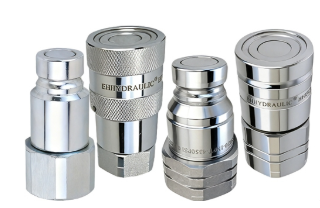
ISO 16028 Flat Face Hydraulic Couplers: The Global
Standard for Leak-Free Hydraulic Connections
Discover how ISO 16028 compliant flat face hydraulic couplers revolutionize hydraulic system performance with superior leak prevention, enhanced safety, and global interoperability
In today's demanding industrial environments where hydraulic system reliability, environmental compliance, and operational efficiency are paramount, ISO 16028 flat face hydraulic couplers have emerged as the gold standard for fluid power connections. These innovative quick-connect couplings represent a significant advancement over traditional poppet-style couplers, offering unparalleled performance in minimizing fluid loss, preventing contamination, and ensuring operator safety. As hydraulic systems become more sophisticated and environmental regulations more stringent, the adoption of ISO 16028 compliant flat face couplers has become essential across industries ranging from construction and agriculture to oil & gas and manufacturing.
The ISO 16028 standard, first established in 1999 and significantly updated in 2021 and 2023, defines the dimensional and performance requirements for flat face hydraulic quick couplers, ensuring global interchangeability between manufacturers. This standardization has transformed hydraulic system design, allowing equipment manufacturers and operators to specify couplings with confidence, knowing they will perform reliably regardless of brand origin. The flat face design fundamentally changes how hydraulic connections are made and broken, addressing long-standing challenges of fluid spillage, air inclusion, and contamination that have plagued hydraulic systems for decades.
What Are ISO 16028 Flat Face Hydraulic Couplers?
ISO 16028 flat face hydraulic couplers are specialized quick-connect fittings designed according to an international standard that specifies their dimensional characteristics, performance requirements, and testing methods. Unlike traditional hydraulic couplings that feature protruding poppet valves, flat face couplers utilize flush sealing surfaces that mate perfectly when connected, creating a virtually leak-free interface. This design innovation represents a fundamental shift in hydraulic connection technology, addressing critical issues that have long challenged hydraulic system designers and operators.
The core principle behind flat face couplers is their ability to contain hydraulic fluid within the system during both connection and disconnection operations. When disconnected, both halves of the coupling seal themselves with flat-face valves that sit flush with the coupling face. This eliminates the cavities and protrusions found in traditional couplers where fluid can pool and spill. When connected, the flat surfaces mate precisely, with O-rings or other sealing elements compressed between them to create a positive seal capable of withstanding extreme pressures up to 5000 PSI (345 bar) in standard configurations .
Key Design Characteristics
- Flat Sealing Surfaces: Both male and female halves feature completely flat faces that eliminate cavities where fluid can accumulate and spill during disconnection
- Double Shut-Off Valves: Each half contains its own sealing valve that closes automatically when disconnected, preventing fluid escape from either side of the connection
- Push-to-Connect Mechanism: Most designs utilize a simple push-to-connect operation that requires no tools, with some models incorporating sleeve-locking devices to prevent accidental disconnection
- Standardized Dimensions: Strict adherence to ISO 16028 specifications ensures dimensional consistency across manufacturers, enabling true interchangeability
- Material Specifications: Typically constructed from carbon steel with various plating options (zinc, zinc-nickel, trivalent chromate) or stainless steel for corrosive environments
The Evolution of ISO 16028 Standardization
The ISO 16028 standard has undergone significant evolution since its initial publication in 1999. Originally covering sizes from 1/4" to 1", the standard was expanded in the 2021 and 2023 revisions to include larger sizes up to 2", reflecting industry demand for standardized larger couplings. This expansion has been particularly important for applications requiring higher flow rates, such as in mining equipment, large construction machinery, and industrial hydraulic systems .
The standardization process has been driven by the Hydraulic Tool Manufacturers Association (HTMA), which worked closely with ISO to develop performance requirements that address real-world operational challenges. The current standard not only specifies dimensional requirements but also defines performance criteria for pressure ratings, flow characteristics, cycle life, and environmental resistance. This comprehensive approach ensures that ISO 16028 compliant couplers deliver consistent performance regardless of manufacturer, providing equipment operators with unprecedented flexibility in sourcing and maintenance.
Technical Specifications and Size Compatibility
Standard Size Range
ISO 16028 flat face couplers are available in a comprehensive range of sizes to accommodate various hydraulic system requirements:
- Standard Sizes (ISO 16028:1999): 1/4", 3/8", 1/2", 5/8", 3/4", and 1"
- Extended Sizes (ISO 16028:2021/2023): 1-1/4", 1-1/2", and 2"
- Specialized Sizes: Some manufacturers offer 1/8" micro-couplers for precision applications and 3" large couplers for heavy-duty industrial applications
The standardization of larger sizes in recent revisions has been particularly significant for industries requiring high-flow hydraulic connections. Previously, manufacturers offered larger couplers that were functionally similar but lacked standardized dimensions, creating compatibility challenges when mixing components from different suppliers. The updated standard now provides clear specifications for these larger sizes, ensuring true interchangeability across the entire size spectrum.
Pressure and Performance Ratings
ISO 16028 couplers are engineered to withstand demanding operating conditions with impressive performance characteristics:
- Maximum Operating Pressure: Up to 5000 PSI (345 bar) for standard steel models, with some specialized series rated for even higher pressures
- Temperature Range: Typically -40°F to +250°F (-40°C to +121°C), with specific models optimized for extreme temperature applications
- Flow Capacity: Varies by size, with 1" couplers capable of handling up to 100 GPM (379 L/min) in some configurations
- Cycle Life: High-quality couplers are tested to 100,000 cycles at 133% of rated pressure, ensuring long service life even in high-frequency applications
- Burst Pressure: Safety factors of 4:1 are common, with burst pressures reaching 14,500 PSI (1000 bar) for some models
Key Advantages of ISO 16028 Flat Face Couplers
1. Leak-Free Operation and Environmental Protection
The most significant advantage of ISO 16028 flat face couplers is their ability to virtually eliminate hydraulic fluid leakage during connection and disconnection. Traditional poppet-style couplers can spill up to several milliliters of hydraulic fluid each time they're disconnected, leading to environmental contamination, safety hazards, and significant fluid loss over time. Flat face couplers reduce this spillage to less than 0.03 ml per disconnect cycle, representing a reduction of over 99% compared to conventional designs .
This leak-free performance delivers multiple benefits: reduced environmental impact from hydraulic fluid contamination, lower fluid consumption and associated costs, cleaner work environments that improve operator safety, and compliance with increasingly stringent environmental regulations. In industries like agriculture and forestry where equipment operates in sensitive environments, this characteristic is particularly valuable for preventing soil and water contamination.
2. Reduced Air Inclusion and System Protection
Air inclusion in hydraulic systems represents a significant operational challenge, causing issues like spongy operation, reduced efficiency, cavitation damage to pumps, and accelerated component wear. Traditional couplers can introduce air into the system during connection as fluid is displaced from the coupling cavity. Flat face couplers minimize this problem through their design - when the flat surfaces mate, they create a seal before any fluid transfer occurs, significantly reducing the amount of air that can enter the system .
This reduction in air inclusion translates to improved system performance, longer component life, reduced maintenance requirements, and more consistent operation. For applications where precise hydraulic control is critical, such as in manufacturing equipment or mobile machinery with sophisticated control systems, this benefit alone can justify the transition to flat face couplers.
3. Enhanced Contamination Control
Hydraulic system contamination is a leading cause of component failure and reduced system life. Traditional couplers with exposed poppet valves and cavities can trap dirt, debris, and moisture, which then enters the hydraulic system during connection. ISO 16028 flat face couplers address this issue through their flush design - with no cavities or protrusions, there are fewer places for contaminants to accumulate. The flat surfaces are also easier to clean before connection, further reducing contamination risk .
This contamination control benefit is particularly valuable in harsh operating environments like construction sites, mining operations, and agricultural fields where equipment is exposed to dust, dirt, and moisture. By keeping contaminants out of the hydraulic system, flat face couplers help extend filter life, reduce wear on pumps and valves, and minimize unscheduled downtime for maintenance and repairs.
4. Global Interchangeability and Standardization
One of the most practical advantages of ISO 16028 compliance is true global interchangeability. Equipment manufacturers can specify ISO 16028 couplers with confidence that they will be compatible with components from multiple suppliers worldwide. This standardization eliminates the compatibility issues that previously required equipment operators to stock multiple brands of couplings or modify equipment to accept proprietary designs .
Major manufacturers including Parker (FEM series), EHHYDRAULIC (95 & 96 series), Stucchi (A series), Faster (FFH series), CEJN (X65 series), Dixon (HT series), and others produce ISO 16028 compliant couplers that are dimensionally interchangeable. This interoperability extends beyond basic connection compatibility to include performance characteristics, ensuring that components from different manufacturers will work together reliably in demanding applications.
Primary Applications and Industry Use Cases
ISO 16028 flat face hydraulic couplers have found widespread adoption across numerous industries due to their superior performance characteristics:
Installation, Maintenance, and Best Practices
Proper Installation Procedures
Correct installation is essential for maximizing the performance and service life of ISO 16028 flat face couplers:
- Surface Preparation: Ensure both coupling faces are clean and free of dirt, debris, and damage before connection. Use lint-free cloths and approved cleaning solvents if necessary
- Alignment: Align the coupler halves straight before pushing together. Avoid angular misalignment that can damage sealing surfaces
- Connection Force: Use firm, straight pressure to connect - most designs require 30-50 lbf of force. Never use tools to force connection
- Verification: After connection, verify positive engagement by checking that the locking sleeve has returned to its locked position
- Pressure Testing: Gradually increase system pressure while checking for leaks before operating at full pressure
Routine Maintenance Guidelines
Regular maintenance ensures optimal performance and extends service life:
- Visual Inspection: Regularly inspect coupling faces for scratches, dents, or corrosion that could compromise sealing
- Seal Condition: Check O-rings and seals for signs of wear, cracking, or extrusion. Replace according to manufacturer recommendations or at first signs of deterioration
- Cleaning Protocol: Clean coupling faces before each connection using appropriate methods. Avoid abrasive materials that could damage sealing surfaces
- Lubrication: Some designs benefit from occasional lubrication of moving parts with compatible hydraulic fluid or specified lubricants
- Storage Practices: When not in use, protect couplers with appropriate caps or plugs to prevent contamination and damage
Critical Safety Considerations
Hydraulic systems operate under extremely high pressures that can cause serious injury or death if not handled properly. Always follow these safety guidelines:
- Never attempt to connect or disconnect couplings while the system is pressurized unless specifically designed for pressure connection
- Wear appropriate personal protective equipment including safety glasses and gloves when working with hydraulic systems
- Relieve all system pressure before performing maintenance or changing components
- Follow manufacturer instructions for specific coupling models and applications
- Regularly inspect hydraulic lines and couplings for signs of wear, damage, or leakage
- Use only components rated for your system's maximum operating pressure
Material Selection and Specialized Variants
Standard Materials and Finishes
Most ISO 16028 flat face couplers are manufactured from carbon steel with various surface treatments to enhance durability and corrosion resistance:
- Zinc Plating: Standard corrosion protection for general industrial applications
- Zinc-Nickel Plating: Enhanced corrosion resistance for more demanding environments
- Trivalent Chromate: Environmentally friendly alternative to hexavalent chrome with good corrosion resistance
- Stainless Steel: 316 stainless steel or similar alloys for highly corrosive environments like marine applications, chemical processing, or food industry
Specialized Series and Features
Manufacturers offer specialized ISO 16028 compliant couplers for specific applications:
- Connect-Under-Pressure Models: Designed to connect safely when residual pressure exists in the system (typically 1500-3000 PSI capability)
- High-Flow Variants: Optimized internal passages to minimize pressure drop and maximize flow efficiency
- Brinelling-Resistant Designs: Special hardening treatments to prevent surface deformation from high-frequency pressure pulses in hammer applications
- Safety Lock Mechanisms: Additional locking features to prevent accidental disconnection in high-vibration applications
- High-Temperature Seals: Viton or other high-temperature elastomers for applications exceeding standard temperature ranges
Economic and Operational Benefits
While ISO 16028 flat face couplers typically have a higher initial cost than traditional poppet-style couplers, they deliver significant economic benefits over their service life:
- Reduced Fluid Consumption: Elimination of spillage during connection/disconnection can save hundreds of liters of hydraulic fluid annually in high-cycle applications
- Lower Cleanup Costs: Reduced fluid spills mean less time and money spent on cleanup and environmental remediation
- Extended Component Life: Reduced contamination and air inclusion extends the life of pumps, valves, and other hydraulic components
- Reduced Downtime: Fewer leaks and failures mean less unscheduled maintenance and higher equipment availability
- Regulatory Compliance: Helps meet increasingly stringent environmental regulations regarding fluid containment
- Improved Safety: Reduced slip hazards from fluid spills and lower fire risk in industrial settings
Future Trends and Developments
The evolution of ISO 16028 flat face hydraulic couplers continues with several emerging trends:
- Smart Coupling Technology: Integration of sensors to monitor coupling status, pressure, temperature, and cycle count for predictive maintenance
- Advanced Materials: Development of new alloys and composite materials for lighter weight, higher strength, and better corrosion resistance
- Enhanced Sealing Technologies: Improved seal designs and materials for higher pressure capabilities and extended service intervals
- Standardization Expansion: Continued development of the ISO 16028 standard to include additional sizes, pressure ratings, and performance categories
- Environmental Focus: Designs optimized for biodegradable hydraulic fluids and other environmentally friendly alternatives
ISO 16028 flat face hydraulic couplers represent a significant advancement in hydraulic connection technology, offering substantial improvements in leak prevention, contamination control, and operational efficiency compared to traditional coupling designs. Their standardized design ensures global interchangeability, while their superior performance characteristics make them the preferred choice for demanding applications across multiple industries.
As environmental regulations tighten and operational efficiency becomes increasingly important, the adoption of ISO 16028 compliant flat face couplers will continue to grow. Their ability to reduce fluid consumption, minimize environmental impact, extend component life, and improve safety makes them not just a technical improvement but a strategic investment for any organization operating hydraulic equipment.
Whether you're specifying new equipment, upgrading existing systems, or simply seeking to improve your hydraulic system's performance and reliability, ISO 16028 flat face couplers offer a proven solution that delivers measurable benefits across the entire equipment lifecycle.
Ready to Upgrade to ISO 16028 Flat Face Hydraulic Couplers?
Contact our hydraulic specialists today to discuss how ISO 16028 compliant flat face couplers can improve your equipment's performance, reduce your environmental impact, and lower your total cost of operation. Our team can help you select the right couplers for your specific application, provide technical support for installation and maintenance, and ensure you get the maximum benefit from this advanced hydraulic connection technology.