Quick Couplings Engineered for Every Environment
- Share
- Issue Time
- Mar 24,2026
Summary
Discover how the right material ensures reliability. Our quick couplings are engineered for harsh, sanitary, and demanding environments. Find your perfect match.
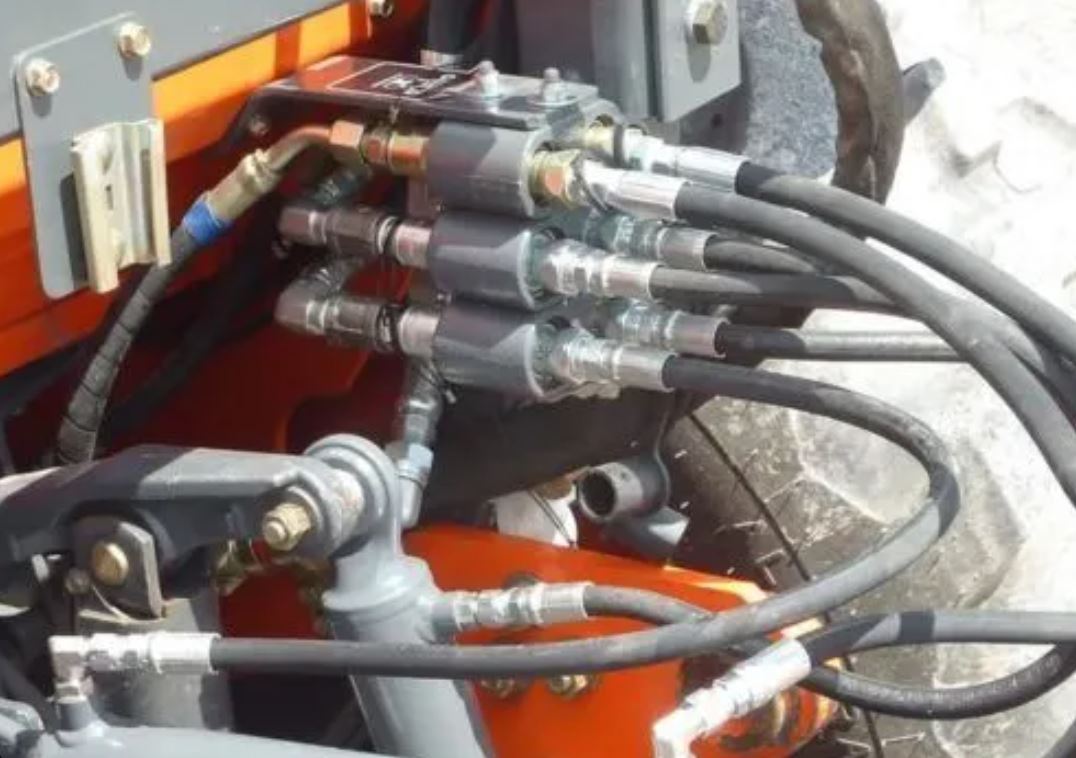
Quick Couplings Engineered for Every Environment
A Comprehensive Guide to Material Selection, Corrosion Resistance, and Global Standards for Industrial Fluid Systems
The Universal Challenge: One Size Does Not Fit All
In today's global industrial landscape, quick couplings serve as critical components across diverse sectors—from offshore oil platforms to pharmaceutical cleanrooms, agricultural machinery to data center cooling systems. The fundamental challenge facing engineers and procurement specialists worldwide is selecting couplings that can withstand specific environmental conditions while maintaining reliability, safety, and efficiency. This guide explores how advanced material engineering and standardized designs create solutions tailored for every operating environment.
Quick couplings are used in a variety of sectors, from agriculture to oil and gas extraction, and earth moving to road transportation, and even so far as to reach a large range of industrial applications, including the chemical and food sectors. The design and construction of quick couplings must, therefore, take into consideration a wide variety of factors and operating conditions in order to guarantee high levels of quality and safety over the complete product line .
Material Selection: The Foundation of Environmental Compatibility
The choice of coupling material directly determines its performance in specific environments. Manufacturers now offer a sophisticated range of materials, each engineered for particular challenges.
Primary Metallic Materials
| Material | Key Properties | Ideal Applications | Limitations |
|---|---|---|---|
| Carbon Steel | Most common and cost-effective; requires plating for corrosion protection; good balance between technical and commercial characteristics | General industrial and mobile applications; low-corrosion environments; construction equipment | Requires protective coatings in corrosive environments; susceptible to rust without treatment |
| Stainless Steel (304/316/316L) | Excellent corrosion resistance; durable and resilient; wide temperature range (-40°C to +180°C); high pressure capability | Marine environments; offshore platforms; chemical processing; food and pharmaceutical industries; high-corrosion applications | Higher cost than carbon steel; may not be necessary for benign environments |
| Brass | Good resistance to medium-level corrosive fluids; easy to work with; compatible with water-based solutions | Cooling systems; lower-pressure applications; laboratory environments; pneumatic systems | Not suitable for high-pressure hydraulic systems; limited chemical resistance compared to stainless steel |
| Aluminum | Lightweight; good corrosion resistance in certain environments; cost-effective for specific applications | Aerospace; mobile equipment where weight matters; certain industrial applications | Lower strength than steel; not suitable for highly corrosive chemicals |
Polymer and Composite Materials
For specialized applications, polymer materials offer unique advantages:
- Polypropylene (PP): Lightweight, corrosion-resistant, suitable for chemical transfer and agricultural spraying. Working temperature range: -150°F to +250°F (-101°C to 121°C)
- PVDF (Kynar): Excellent chemical resistance, used for aggressive chemicals and high-temperature fluids
- PTFE (Teflon): Chemically inert, non-stick surface, suitable for ultra-pure fluid handling and corrosive media
- Nylon Reinforced with Fiberglass: Combines strength with corrosion resistance for demanding applications
Corrosion Classification: Matching Materials to Environmental Severity
Understanding corrosion levels is essential for proper material selection. Environments can be categorized into three primary corrosion levels:
Low Corrosion Environments
No particular environmental conditions; hydraulic fluids kept free of contamination; indoor industrial settings with controlled atmospheres. Recommended materials: Carbon steel with Chrome 3 or ZincNickel plating, brass for specific applications.
Medium Corrosion Environments
Related to fluid characteristics, such as cooling systems using water-based solutions; moderate chemical exposure; coastal areas with salt spray. Recommended materials: Stainless steel 304, brass with appropriate seals, aluminum with protective treatments.
High Corrosion Environments
Hostile conditions including offshore oil platforms, chemical processing plants, marine applications, and highly contaminated industrial sites. Recommended materials: Stainless steel 316/316L, specialized polymers (PVDF, PTFE), heavily plated or coated steel.
EHHYDRAULIC, with nearly 60 years of experience, provides protective treatments including Chrome 3 (zinc and chromium galvanizing), ZincNickel alloys, and QPQ heat treatments to enhance material characteristics for specific corrosion challenges .
Seal Material Compatibility: The Critical Interface
Seal Selection Guide
The sealing element inside a hydraulic coupling plays a critical role in maintaining fluid integrity and preventing leaks. Choosing the wrong seal for your hydraulic fluid or temperature conditions can result in premature failure .
Nitrile (Buna-N): General-purpose material excellent for petroleum-based fluids with temperature range from -40°C to 120°C. Most common in carbon steel couplings for industrial applications.
Viton (FKM): High-temperature and chemical-resistant material used with aggressive fluids like synthetic oils and biodiesel. Temperature range from -20°C to 200°C. In most stainless steel quick couplings, FKM seals are preferred because stainless steel couplings are usually used in applications where corrosive liquids are transported .
EPDM: Suitable for phosphate ester and glycol-based fluids, water, and steam systems. Not compatible with petroleum oils. Excellent for food industry applications where contact with food is possible without contamination.
PTFE (Teflon): Chemically inert and highly temperature-resistant, used in static seals or non-dynamic applications requiring ultra-pure fluid handling.
Global Standards and Interchangeability
International standardization ensures compatibility and safety across global markets. Key standards include:
ISO 7241: Hydraulic fluid power dimensions and requirements for quick-action couplings (Series A and B)
ISO 16028: Flat-face quick-action couplings for minimal fluid loss and air inclusion
ISO 5675: Agricultural and forestry machinery general purpose quick-action couplings
ISO 14540: High-pressure quick couplings (up to 720 bar)
ISO 14541: Screw-to-connect quick couplings for medium-pressure applications
SAE J2044: Quick connect coupling specification for liquid fuel and vapor/emissions systems
A-A-59326: U.S. military specification for camlock couplings
DIN 2828: German standard for quick-release couplings
These standards guarantee that quick couplings from different manufacturers are interchangeable, facilitating easy maintenance and replacement while reducing downtime and operational costs .
Industry-Specific Applications
Different sectors present unique challenges that dictate coupling selection:
Oil & Gas and Marine
Offshore platforms and shipbuilding demand stainless steel 316/316L couplings with Viton seals. Temperature ranges from -20°C to +180°C with pressure ratings up to 5000 psi. Corrosion resistance is paramount in saltwater environments .
Food and Pharmaceutical
Sanitary requirements dictate stainless steel 316L or specialized polymers. EPDM seals are preferred for steam cleaning compatibility. Quick couplings must prevent contamination and allow for easy cleaning and sterilization.
Agriculture
ISO 5675 standard couplings dominate, with carbon steel and brass being common. Dust and debris resistance is critical, often requiring flat-face couplings that minimize internal exposure during connection/disconnection.
Data Center Cooling
Emerging Universal Quick Disconnects (UQD) standards within the Open Compute Project enable efficient liquid cooling solutions. Precision manufacturing ensures leak-free connections critical for electronics protection .
Selection Methodology: A Systematic Approach
Follow this five-step process for optimal coupling selection:
- Assess Environmental Conditions: Determine corrosion level, temperature range, chemical exposure, and contamination risks
- Identify Fluid Characteristics: Analyze chemical compatibility, pressure requirements, and flow rates
- Select Body Material: Choose based on corrosion resistance, strength, and cost considerations
- Specify Seal Material: Match seal elastomer to fluid type and temperature range
- Verify Standards Compliance: Ensure compatibility with existing systems and industry requirements
For high-vibration applications, consider screw-to-connect couplers with locking sleeves. In contaminated environments, flat-face designs with protective dust caps prevent ingress of debris .
Future Trends and Innovations
The quick coupling industry is evolving with several key trends:
Smart Connectivity: IoT-enabled couplings monitor pressure, flow, and leaks in real-time, enabling predictive maintenance and reducing downtime. Digital twins simulate performance for optimization and risk mitigation .
Advanced Composites: Materials replacing heavier metals improve strength-to-weight ratios while maintaining corrosion resistance. Parker Hannifin leads in integrating composites for enhanced durability .
Sustainability Focus: Eco-friendly materials, energy-efficient designs, and lifecycle transparency are becoming core market drivers. Regulations like EU REACH and ISO 14001 encourage leak-free designs and recyclable components .
Modular Systems: Configurable quick couplings allow rapid deployment across applications, enhancing flexibility and reducing inventory requirements.
The era of "one-size-fits-all" quick couplings has ended. Today's global industrial environment demands sophisticated solutions engineered for specific conditions—from the corrosive depths of offshore platforms to the sterile precision of pharmaceutical manufacturing. By understanding material properties, corrosion mechanisms, seal compatibility, and international standards, engineers can select couplings that ensure reliability, safety, and efficiency across every operating environment. The future promises even greater specialization through smart technologies, advanced materials, and sustainable designs, continuing the evolution of quick couplings as critical components in global fluid handling systems.