Threaded Poppet Valves for Reliable Hydraulic Couplings
- Share
- Issue Time
- Mar 11,2026
Summary
Threaded Poppet Valves for Reliable Hydraulic Couplings
Achieve zero-leak performance with our threaded poppet valve hydraulic couplings. Designed for reliability and dry-break functionality to enhance system safety, minimize fluid loss, and reduce maintenance.
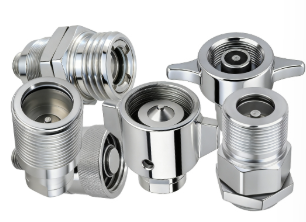
Threaded Poppet Valves for Reliable Hydraulic Couplings
Engineering Excellence in High-Pressure Fluid Power Systems: How Threaded Poppet Valve Technology Ensures Unmatched Reliability, Safety, and Performance in Demanding Industrial Applications Worldwide
In the complex ecosystem of hydraulic systems, where component failure can lead to catastrophic operational downtime, safety hazards, and significant financial losses, the humble coupling represents both a critical connection point and a potential vulnerability. Threaded poppet valves have emerged as the engineering solution of choice for hydraulic couplings that demand absolute reliability under extreme conditions. These sophisticated components combine mechanical security with precision fluid control, creating connections that withstand vibration, pressure spikes, and environmental challenges that would compromise lesser designs.
As global industries push hydraulic systems to operate at higher pressures, in more demanding environments, and with greater efficiency requirements, the technology behind threaded poppet valves has evolved to meet these challenges. From offshore drilling platforms battling corrosive saltwater to mining equipment enduring constant shock loads, these valves provide the reliability backbone for modern fluid power systems. This comprehensive analysis explores why threaded poppet valve technology represents the gold standard for hydraulic coupling reliability across diverse industrial applications.
The Engineering Foundation: How Threaded Poppet Valves Work
At their core, threaded poppet valves integrate two fundamental principles: positive mechanical connection through threading and precise fluid control through poppet valve mechanisms. Unlike simpler coupling designs, this combination addresses both the physical security of the connection and the hydraulic integrity of the fluid path. The threaded connection provides robust mechanical engagement that resists vibration-induced loosening—a common failure point in push-to-connect systems operating in dynamic environments.
The poppet valve component operates on a spring-loaded principle that automatically opens during connection and seals upon disconnection. This design minimizes fluid loss during coupling and uncoupling operations while maintaining system pressure integrity. Advanced designs feature pressure-balanced poppet valves that operate without substantial fluid pressure exerted axially against the valve face, significantly reducing the force required for connection and disconnection while maintaining excellent sealing characteristics.
Critical Design Innovations
Pressure-Balanced Operation: Modern threaded poppet valves utilize radial passages that interconnect through an annular cavity between the poppet valve body and the valve bore. This innovative approach allows fluid to flow with minimal pressure drop and turbulence while eliminating the high axial forces that traditionally made high-pressure connections challenging to operate manually.
Metal-to-Metal Valve Stops: Precision-engineered metal stops maintain valve alignment and prevent flow checking, ensuring consistent performance over thousands of connection cycles. This durability is essential for applications where couplings are frequently connected and disconnected as part of normal operations.
Dual-Sealing Technology: Many threaded poppet valves incorporate both primary and secondary seals, with the primary seal handling normal operating conditions and the secondary seal providing backup protection. This redundancy significantly enhances reliability in critical applications where seal failure could have serious consequences.
Technical Superiority: Performance Characteristics That Matter
Threaded poppet valves deliver performance metrics that directly translate to operational reliability in real-world applications. Understanding these characteristics is essential for proper specification and implementation.
| Performance Parameter | Industry Standard Range | Impact on Reliability | Application Considerations |
|---|---|---|---|
| Pressure Rating | 3,000-10,000+ psi (207-690+ bar) | Withstands system pressure spikes without failure | Select with 1.5-2x safety factor over maximum system pressure |
| Leakage Rate | <1 drop per minute at rated pressure | Minimizes fluid loss and environmental contamination | Critical for environmentally sensitive applications |
| Connection Force | 15-50% reduction vs. conventional designs | Reduces operator fatigue and improper connections | Important for frequently connected applications |
| Temperature Range | -40°C to +120°C (-40°F to +248°F) | Maintains performance across extreme environments | Seal material selection critical for temperature extremes |
| Cycle Life | 10,000+ connection cycles | Reduces maintenance frequency and replacement costs | Essential for equipment with frequent hose changes |
| Vibration Resistance | Withstands 5-15g vibration loads | Prevents accidental disconnection in mobile equipment | Critical for construction, mining, and transportation |
Material Science Advancements
The reliability of threaded poppet valves begins with material selection. High-strength alloy steels with appropriate heat treatments provide the structural integrity needed for high-pressure applications. For corrosive environments, stainless steel alloys (particularly AISI 316L) offer exceptional resistance to saltwater, chemicals, and atmospheric corrosion. Advanced surface treatments including zinc-nickel plating, phosphate coatings, and specialized polymer finishes extend service life in aggressive environments.
Seal materials have seen particularly significant advancements. While standard nitrile (NBR) rubber remains excellent for petroleum-based hydraulic fluids, specialized applications now benefit from:
- Fluorocarbon (Viton) Seals: Exceptional chemical resistance and high-temperature performance up to 200°C (392°F)
- Ethylene Propylene (EPDM) Seals: Superior resistance to weathering, ozone, and water-based fluids
- Polyurethane Seals: Excellent abrasion resistance for applications with particulate contamination
- PTFE Composite Seals: Nearly universal chemical compatibility and extremely low friction
- Hydrogenated Nitrile (HNBR) Seals: Enhanced temperature and chemical resistance over standard NBR
Global Applications: Where Reliability Cannot Be Compromised
Threaded poppet valve couplings have become indispensable across industries where hydraulic system failure carries unacceptable risks. Their adoption reflects a global recognition that coupling reliability directly impacts operational safety, productivity, and environmental protection.
- Offshore Oil and Gas: On drilling platforms and production facilities, threaded poppet valves withstand constant vibration, corrosive saltwater exposure, and extreme pressure conditions while preventing environmentally catastrophic leaks. API 16D certification is typically required for these critical applications.
- Mining and Mineral Processing: Hydraulic systems in mining equipment face some of the most severe operating conditions, with constant shock loads, abrasive dust, and temperature extremes. Threaded connections prevent accidental disconnection during equipment operation, while robust seals contain hydraulic fluid in environmentally sensitive areas.
- Construction and Heavy Equipment: Mobile hydraulic equipment including excavators, cranes, and loaders benefit from vibration-resistant threaded connections that maintain integrity despite constant movement and impact loads. The ability to connect under residual pressure reduces downtime during attachment changes.
- Industrial Manufacturing: Injection molding machines, presses, and other high-cycle equipment require couplings that maintain seal integrity through thousands of pressure cycles. Threaded poppet valves provide consistent performance where leakage would compromise product quality or create safety hazards.
- Marine and Shipbuilding: Naval vessels, commercial ships, and offshore support vessels utilize stainless steel threaded poppet valves certified to Lloyd's Register and other marine standards. These applications demand exceptional corrosion resistance and reliability in saltwater environments.
- Renewable Energy: Wind turbine hydraulic systems, particularly in offshore installations, require couplings that withstand years of vibration and environmental exposure with minimal maintenance. Threaded poppet valves provide the long-term reliability needed in these difficult-to-access applications.
Comparative Advantage: Why Threaded Poppet Valves Outperform Alternatives
When evaluated against alternative coupling technologies, threaded poppet valves demonstrate clear advantages in reliability-critical applications. Understanding these comparative benefits informs proper technology selection.
Push-to-connect couplings offer quick operation but sacrifice mechanical security. Their ball-lock mechanisms can disengage under vibration, making them unsuitable for mobile equipment or high-vibration environments. Threaded designs require positive mechanical engagement that cannot be accidentally released, providing inherent safety advantages. Additionally, push-to-connect designs typically have lower pressure ratings and greater susceptibility to contamination during connection. Flat-face couplings excel at minimizing fluid spillage during connection and disconnection, making them ideal for environmentally sensitive applications. However, they generally lack the vibration resistance of threaded designs and may require more complex valving mechanisms. Threaded poppet valves offer a balanced solution with good spillage control combined with superior mechanical security, making them suitable for applications where both factors are important. Traditional threaded couplings without poppet valves require complete system depressurization before connection or disconnection, increasing downtime and operational complexity. Threaded poppet valves allow connection under residual pressure (typically up to 10% of rated pressure), significantly improving operational efficiency. The integrated poppet valve also provides superior sealing compared to simple threaded connections that rely solely on thread engagement for sealing. The fundamental advantage of threaded poppet valve technology lies in its balanced approach: it provides the mechanical security of threaded connections combined with the fluid control of poppet valves, creating a solution that addresses both the physical and hydraulic aspects of coupling reliability. Proper selection requires systematic evaluation of application requirements against valve capabilities. This methodology ensures optimal performance and reliability. Even the most advanced threaded poppet valve cannot deliver reliable performance if improperly installed. Following established best practices ensures optimal results. Begin with thorough inspection of all components for damage, contamination, or wear. Clean mating surfaces meticulously using lint-free cloths and appropriate solvents. Verify thread compatibility between coupling halves and system ports. Apply thread sealant or anti-galling compound according to manufacturer specifications, taking care to avoid contamination of sealing surfaces. Regular maintenance extends service life and ensures continued reliability. Establish inspection intervals based on operating severity, with visual checks for leakage, corrosion, and thread damage. Implement preventive seal replacement at manufacturer-recommended intervals rather than waiting for failure. Maintain detailed records of installation dates, maintenance activities, and performance observations to inform future replacement decisions. The evolution of threaded poppet valve technology continues, driven by industry demands for greater reliability, intelligence, and sustainability. Smart Valve Integration: Next-generation threaded poppet valves incorporate embedded sensors that monitor pressure, temperature, connection status, and cycle count. This data enables predictive maintenance algorithms that identify potential failures before they occur, significantly reducing unplanned downtime. Wireless connectivity allows remote monitoring of critical connections in difficult-to-access locations. Advanced Materials: Research into nanocomposite materials promises seals with unprecedented wear resistance and temperature capabilities. Self-healing polymer technologies may eventually allow seals to repair minor damage during operation. Surface engineering techniques including diamond-like carbon coatings extend component life in abrasive environments. Environmental Sustainability: Development focuses on reducing hydraulic fluid leakage to near-zero levels, particularly important as environmental regulations tighten globally. Bio-compatible seal materials allow use with environmentally friendly hydraulic fluids. Manufacturing processes increasingly emphasize reduced energy consumption and material waste. Standardization and Digitalization: Industry-wide standardization efforts improve interchangeability and reduce inventory requirements. Digital twins of coupling systems enable virtual testing and performance optimization before physical implementation. QR codes and RFID tags on individual valves facilitate tracking throughout their lifecycle. Threaded poppet valves represent more than just another component in hydraulic systems—they embody a commitment to reliability that resonates across global industries. In an era where equipment uptime directly correlates with operational profitability and safety, these sophisticated couplings provide the assurance that hydraulic connections will perform as intended, regardless of environmental challenges or operational demands. The technological evolution from simple threaded connections to advanced pressure-balanced poppet valve designs reflects the hydraulic industry's response to increasingly demanding applications. Offshore energy exploration, mining at greater depths, construction of taller structures, and manufacturing with tighter tolerances all depend on hydraulic systems that cannot fail. Threaded poppet valves meet this challenge by combining mechanical security with hydraulic precision. For engineers, maintenance professionals, and equipment operators worldwide, understanding threaded poppet valve technology is no longer optional—it's essential knowledge for designing, maintaining, and operating reliable hydraulic systems. As this technology continues to evolve with smart features, advanced materials, and enhanced sustainability, its role in ensuring hydraulic system reliability will only grow more critical. The future of industrial productivity and safety increasingly depends on components that don't just meet specifications but exceed expectations for reliability. Threaded poppet valves for hydraulic couplings stand at the forefront of this reliability revolution, proving that sometimes the most critical innovations are those that ensure everything stays connected—securely, efficiently, and reliably. When evaluating hydraulic coupling solutions for your next project, consider not just the immediate technical specifications but the long-term reliability implications. Threaded poppet valve technology offers a proven path to hydraulic connections that withstand the test of time, environment, and operational demands—a true engineering solution for a world that cannot afford to disconnect.Threaded Poppet Valves vs. Push-to-Connect Couplings
Threaded Poppet Valves vs. Flat-Face Couplings
Threaded Poppet Valves vs. Conventional Threaded Couplings
Selection Methodology: Choosing the Right Threaded Poppet Valve
Selection Factor
Evaluation Criteria
Technical Considerations
Operating Environment
Temperature extremes, chemical exposure, UV radiation, saltwater
Material compatibility, seal selection, surface treatments
Pressure Profile
Maximum operating pressure, pressure spikes, impulse frequency
Pressure rating with safety factor, impulse resistance testing
Fluid Compatibility
Hydraulic fluid type, additives, particulate contamination
Seal material selection, filtration requirements
Connection Frequency
Daily, weekly, or occasional connections
Cycle life rating, wear resistance, ease of operation
Vibration and Shock
Constant vibration levels, impact shock magnitude
Thread locking features, mechanical security testing
Regulatory Requirements
Industry certifications, environmental regulations
API, ISO, Lloyd's certifications, environmental compliance
Total Cost of Ownership
Initial cost, maintenance requirements, expected service life
Lifecycle analysis, maintenance interval optimization
Installation Excellence: Best Practices for Maximum Reliability
Pre-Installation Preparation
Connection Procedure
Maintenance Protocols
Future Directions: Emerging Technologies and Trends
Conclusion: The Reliability Imperative in Modern Hydraulics