Upgrade Old Machinery with Flat-Face Hydraulic Quick Disconnects
- Share
- Issue Time
- Sep 14,2026
Summary
Upgrade old machinery with flat-face hydraulic quick disconnects to eliminate leaks, speed up line changes, and boost safety. Simple retrofit steps included
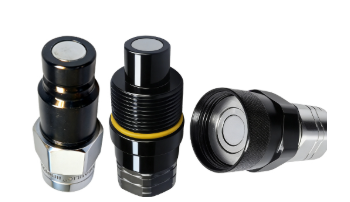
Upgrade Old Machinery with Flat-Face Hydraulic Quick Disconnects
Upgrading old machinery with modern flat-face hydraulic quick disconnects is one of the fastest ways to reduce leaks, cut contamination, simplify attachment changes, and extend the life of aging hydraulic systems. For global fleets in construction, agriculture, forestry, mining, demolition, snow removal, and industrial maintenance, the retrofit should begin with the entire hydraulic connection point—not just the coupler. A correct flat-face retrofit matches thread style, body size, flow demand, working pressure, residual pressure behavior, fluid type, and jobsite conditions. The result is cleaner connections, less fluid loss, safer operation, standardized attachments across mixed equipment, and better performance with modern high-flow tools such as mulchers, breakers, augers, brush cutters, and snow implements.
Key Takeaways for Global Retrofit Projects
These priorities should guide every old-machinery upgrade, regardless of region, brand, or industry:
- Audit the full connection point first: coupler type, thread standard, hose size, pressure, flow, residual pressure, and attachment duty cycle.
- Select flat-face couplers by internal flow path and pressure drop, not by hose diameter alone.
- Confirm working pressure, burst pressure, impulse performance, temperature range, and fluid compatibility before purchase.
- Use connect-under-pressure flat-face solutions when attachments store thermal or load-induced residual pressure.
- Replace both mating halves whenever possible to avoid mixing new and worn components.
- Standardize threads, dust protection, labeling, and procedures across regional fleets to reduce errors and spare-part complexity.
- For high-flow or multi-function upgrades, evaluate auxiliary hydraulic kits, diverter valves, Saturn blocks, and bracket-mounted manifolds.
1. Audit Existing Connections Before Changing Any Coupler
Older machines may use poppet-style couplers, Pioneer-type couplings, legacy OEM connectors, proprietary agricultural tips, or non-standard repair adapters. Some units have been modified over years with mixed brands, reduced hose sizes, field-made fittings, and makeshift extensions. A reliable retrofit starts by recording every detail at the machine port and the attachment port. The goal is to understand how the current interface behaves under real flow, pressure, temperature, and dirt exposure. Two couplers may look identical externally yet have completely different sealing geometry, pressure ratings, spill characteristics, and flow capacity.
Document the following for each hydraulic circuit: equipment model and model year; attachment models; current male and female coupler brands; nominal body size; hose inner diameter; thread form and seal type; operating pressure under load; peak pressure spikes; flow rate required by each attachment; fluid type and viscosity; ambient temperature range; frequency of connection and disconnection; observed leakage; difficulty connecting under residual pressure; and contamination history such as valve failures, cylinder scoring, or pump wear. This complete profile prevents expensive mistakes such as installing a clean flat-face coupler on an undersized hose or choosing a thread adapter that creates turbulence and pressure drop.
- Identify coupler family: traditional poppet, ball-valve, agricultural tip, Pioneer, OEM proprietary, or flat-face ISO 16028-style.
- Identify thread standard: NPT/NPTF, BSPP, BSPT, JIC/SAE 37°, SAE O-ring boss, ORFS, metric taper, or DIN/ISO metric.
- Inspect hose condition, minimum bend radius, support clamps, abrasion protection, and routing near heat sources.
- Check port damage, cross-threading, adapter stacking, and previous repairs that may hide the original specification.
- Record attachment duty: intermittent, continuous, high shock, high heat, cold-start, or multi-shift operation.
For global operations, thread compatibility is especially important. North American fleets often use JIC, NPT, or SAE O-ring boss; European and many export machines use BSPP, DIN, or metric; agricultural equipment may combine ISO agricultural profiles with custom adapters. A retrofit plan should state the preferred regional standard and limit unnecessary adapter stacking.
2. Match Flat-Face Couplers to Real Flow Demand
Flow is one of the most overlooked variables in old-equipment retrofits. Many legacy machines were originally specified for light buckets, blades, or low-demand attachments. As operators add mulchers, brush cutters, hydraulic hammers, augers, trenchers, snow blowers, sweepers, and high-capacity thumbs, the original couplers may become restrictive. A small body size can create excessive pressure drop, generate heat, slow tool response, and reduce productivity. Flat-face couplers improve cleanliness, but the body size and internal flow path must still support required liters per minute or gallons per minute.
Hose size is a useful clue but not a complete answer. A 1-inch hose does not guarantee a 1-inch equivalent coupler path. The effective orifice, valving, spring force, locking mechanism, and port transitions all influence flow capacity. For high-flow skid-steer, compact track loader, excavator, and forestry circuits, specify flat-face couplers with a flow rating that covers the highest-demand attachment, not only the average tool. Include a safety margin for cold oil, higher viscosity biodegradable fluids, and long hose runs.
- Calculate required flow per attachment and compare with coupler published flow curves, not only nominal size.
- Estimate system pressure drop across the coupler at expected flow, hose length, and oil viscosity.
- Prioritize larger flat-face bodies where high-flow hydraulic tools run continuously.
- Avoid downsizing connectors to fit tight spaces if the attachment demands high volume.
- Review downstream components: pump, valves, cooler, filter, hose, and actuator must all support the same flow target.
Practical example: an older loader originally fitted with small poppet couplers may connect physically to a new mulcher, but if the coupler restricts flow the motor loses RPM, hydraulic oil overheats, and the cutter underperforms. The correct retrofit replaces both halves with flat-face couplers sized for the mulcher’s continuous flow, supported by adequate hose and proper thread adapters.
3. Verify Working Pressure, Burst Pressure, and Safety Margin
Pressure selection is critical for old machinery because aging cylinders, pumps, and valves may already operate near design limits. Every flat-face quick disconnect should be rated for the system’s normal working pressure and for intermittent spikes caused by shock loads, breaker impact, overload relief activity, or rapid directional changes. Working pressure is the continuous operating level; burst pressure is the ultimate failure threshold; the safety factor defines the usable margin. Impulse testing, fatigue performance, and lock-ring strength are equally important for mobile equipment subjected to vibration.
Global buyers should request documentation aligned with recognized hydraulic coupling standards. Flat-face interfaces are commonly evaluated against ISO 16028 dimensional and performance principles, while general quick-acting couplings may reference ISO 7241 and regional SAE or EN practices. Confirm temperature range with the actual fluid: mineral oil, HM anti-wear oil, biodegradable ester, HFD fire-resistant fluid, and cold-climate synthetic blends all affect seal compatibility. Old machines converted to environmentally acceptable fluids in Europe, Scandinavia, or environmentally sensitive mining regions may need alternative seals and special cleaning before coupler installation.
- Obtain working pressure rating, burst pressure rating, impulse rating, and temperature range in writing.
- Confirm pressure spike history from relief valves, load-holding valves, and attachment shock cycles.
- Match coupler pressure rating to hose, adapter, manifold, and valve ratings in the same circuit.
- Specify seals compatible with fluid type, temperature, and regional environmental regulations.
- For demolition, breaking, or heavy forestry, choose heavy-duty flat-face designs with reinforced locking systems.
Do not assume a newer coupler is automatically safe just because it is flat-face. A clean mating surface does not replace correct pressure engineering. The retrofit specification must treat the coupler, hose, adapter, and attachment circuit as one pressure-containing system.
4. Reduce Contamination and Fluid Loss with Flat-Face Geometry
Traditional poppet couplers often have recessed sockets, curved sealing areas, and cavities where dirt, mud, ice, dust, and leftover oil accumulate. On older jobsites, that contamination enters the hydraulic system at every connection. Flat-face quick disconnects present a planar mating surface that can be wiped before connection, reducing trapped debris and limiting fluid film exposure. For global contractors working in arid dust, tropical mud, winter road salt, mining slurry, or agricultural manure environments, this geometry supports longer component life and lower maintenance cost.
Zero-spill or low-spill flat-face designs also reduce hydraulic oil loss during disconnect. In regions with strict environmental rules, rental fleet sustainability targets, or offshore/forestry containment requirements, minimizing drips protects soil, asphalt, and workshop floors. Combined with dust caps, dust plugs, dedicated storage boards, and operator standard procedures, flat-face couplers create a repeatable clean-interface program.
- Use flat mating faces that can be quickly wiped with a lint-free cloth before every connection.
- Fit durable caps and plugs on both machine and attachment halves when disconnected.
- Establish color coding or laser labeling to prevent mismatched male/female pairs.
- Train operators to inspect sealing faces for scratches, sand, ice, paint, or seal extrusion.
- Pair flat-face couplers with high-quality filtration and regular fluid sampling to maximize ROI.
Contamination control is not only a coupler feature; it is a process. The retrofit should include scheduled inspections, replacement seals, clean storage, and documented connection procedures for every region and operator group.
5. Solve Residual Pressure for Safe, Hand-Operated Connections
Residual pressure is one of the most common reasons old equipment is hard to couple. An attachment left in sunlight expands fluid and raises pressure; a cylinder holding load retains pressure; a closed-center valve traps oil; or thermal cooling overnight creates vacuum/high-pressure imbalance. Operators often force connections, loosen fittings, or crack hoses to release pressure. These shortcuts cause leaks, contamination, injury, and premature wear.
Modern flat-face retrofits can include connect-under-pressure capability. For one-sided residual pressure on the attachment side, a flat-face coupler with pressure-overcoming valving may allow manual connection. For severe conditions—high pressure, impulse, vibration, large-volume circuits, or heavy-duty demolition—threaded flat-face couplers provide controlled mating and better resistance to accidental decoupling. In some systems, a small bleed valve, pressure relief adapter, or load-holding modification is integrated into the retrofit so operators never need to loosen lines.
- Measure residual pressure on both machine and attachment sides after shutdown, sun exposure, and overnight cooling.
- Select standard flat-face couplers for low residual pressure and infrequent pressure-locked connections.
- Select pressure-compensating or connect-under-pressure flat-face couplers for routine locked-line conditions.
- Consider threaded flat-face couplings for very high pressure, impulse, vibration, or safety-critical circuits.
- Never specify couplers that require hammering, pipe-wrench forcing, or cracked fittings for normal operation.
Residual pressure diagnosis should be part of the audit. If an old excavator or skid steer consistently requires “burping” a line before attachment change, the retrofit must include a pressure-management solution, not only new seals.
6. Step-by-Step Flat-Face Retrofit Workflow
A structured workflow keeps the project predictable for single machines or global fleets:
- Complete the connection audit: coupler type, thread, flow, pressure, residual pressure, fluid, and duty cycle.
- Define target standard: flat-face body size, ISO/SAE/DIN dimension, thread conversion policy, seal material, and pressure class.
- Select both male and female halves from the same manufacturer series to ensure mating compatibility and spill performance.
- Choose adapters only when necessary; prefer direct-threaded couplers to minimize transition losses and leak points.
- Decommission old couplers, relieve all system pressure, cap open ports, and clean hose ends before removal.
- Install new flat-face couplers with correct torque, thread sealant or O-ring practice per thread type, and anti-seize where specified.
- Replace aged hoses, worn brackets, damaged dust caps, and undersized transitions identified during audit.
- Label circuits by flow class, pressure class, and attachment compatibility for multilingual global sites.
- Perform leak test, flow test, pressure-decay test, and functional attachment trial under load.
- Document the retrofit in the fleet manual and update spare-parts inventory by region.
Replacing only one half is risky. A new flat-face female paired with a worn poppet male—or a mixed-brand flat-face pair not designed together—may connect poorly, leak, restrict flow, or wear rapidly. For the most reliable upgrade, replace both mating halves and verify they belong to the same coupling series.
7. Add Auxiliary Hydraulic Kits for High-Flow and Multi-Function Machines
Some older machines need more than coupler replacement. If the retrofit goal includes high-flow attachments, additional hydraulic functions, third or fourth auxiliary lines, improved hose routing, or centralized connection points, an auxiliary hydraulic kit may be the correct scope. Kits can include flat-face quick disconnects, thread adapters, mounting brackets, ball valves, Saturn-block manifolds, diversion components, pressure test ports, and protective enclosures. For excavators and mini-excavators, kits convert the machine into a more versatile attachment carrier. For compact track loaders and skid steers, kits support high-flow motors while reducing heat and connection errors.
Global fleets benefit because a kit creates a repeatable interface. Instead of custom hose fabrication at every branch, the standardized kit defines coupler positions, flow paths, relief settings, and dust protection. This is especially valuable when the same attachment must move between regions, rental depots, or sister companies with different OEM base machines.
- Evaluate current auxiliary circuits: number of lines, flow split, electrical control, and joystick mapping.
- Specify flat-face couplers sized for combined high-flow and standard-flow attachments.
- Add manifold blocks or Saturn-style interfaces to consolidate ports and reduce adapter clutter.
- Include ball valves or isolation points for safe service without full system drain.
- Use routed brackets and hose guards to protect couplers from impact, mud, and constant flexing.
An auxiliary kit should be engineered as a subsystem. Coupler choice, block choice, hose choice, and valve choice must be coordinated so the old machine gains modern attachment flexibility without creating new pressure-drop or overheating issues.
8. Use Diverter Valves for Thumbs, Clamps, and Secondary Tools
Older excavators and backhoes often retain a hydraulic thumb while also running grapples, hammers, compactors, augers, or shear attachments. Swapping hoses repeatedly wastes time and increases contamination risk. A hydraulic diverter valve lets one auxiliary circuit serve multiple functions by redirecting flow between the thumb and another attachment. The operator selects the required function without disconnecting couplers at every job change.
In a flat-face retrofit, the diverter strategy reduces connection events, extends coupler life, and simplifies training. It is particularly useful for urban excavation, utility work, landscaping, recycling, and municipal fleets where the same machine performs several tasks daily. The diverter must be sized for total flow and pressure, equipped with appropriate flat-face fill/return couplers if attachments are still changed, and wired or plumbed for reliable operator control.
- Identify circuits where one function remains installed but secondary tools change frequently.
- Select a diverter rated for full auxiliary flow, working pressure, and electrical/electronic control signals.
- Keep flat-face couplers for removable attachments and use permanent manifolds for fixed functions.
- Document divert logic so operators understand thumb priority, auxiliary priority, and safety interlocks.
- Test under load to confirm no excessive pressure drop, overheating, or delayed tool response.
Diverters do not eliminate the need for correct couplers; they reduce unnecessary disconnect cycles. Combine diverter engineering with flat-face standardization for maximum uptime.
9. Standardize Global Fleets and Attachment Compatibility
Many older fleets mix brands, model years, regions, and coupler generations. That diversity increases operator error, adapter inventory, and downtime. A flat-face retrofit program can standardize the connection strategy across excavators, loaders, telehandlers, tractors, forestry carriers, and attachments. Standardization means defined body sizes per flow class, approved thread adapters per region, uniform dust-cap protocol, consistent labeling in local languages, and a central spare-parts matrix.
For contractors, municipalities, rental companies, agricultural groups, and mining service providers, standardization improves operator training and allows one attachment to move between compatible machines. It also supports procurement economies: fewer coupler series, fewer seal kits, fewer emergency adaptations. The retrofit policy should state which flat-face series is approved for low flow, which for high flow, and which for connect-under-pressure or threaded duties.
- Create a global coupler standard by flow class, pressure class, thread region, and attachment type.
- Reduce mixed-brand interfaces by replacing both halves during scheduled maintenance windows.
- Issue operator SOPs with photos, torque values, thread identification, and contamination checks.
- Maintain regional spare kits: couplers, seals, dust caps, adapters, mounting hardware, and labels.
- Audit quarterly to remove unauthorized adapters and document new attachments entering the fleet.
Standardization is an SEO- and operational-win topic: global customers searching for “flat-face retrofit for mixed fleet,” “ISO 16028 excavator couplers,” or “skid steer high-flow quick disconnect standard” need clear, repeatable specifications rather than ad-hoc repairs.
10. Test, Validate, and Monitor After Installation
After installation, the retrofit must be validated under field conditions, not only a bench leak check. A basic static leak test confirms sealing, but it does not prove flow capacity, residual-pressure connectability, thermal stability, or attachment performance. The commissioning procedure should simulate real duty: hot oil, cold start, maximum attachment flow, repeated connect/disconnect, and pressure-spike events.
- Perform low-pressure fill and bubble/visual leak inspection on all threads, seals, and coupler faces.
- Run the highest-flow attachment and record inlet/outlet pressure drop across the coupler pair.
- Verify hand connection with simulated residual pressure if connect-under-pressure couplers are specified.
- Check operating temperature rise during continuous duty and compare with pre-retrofit baseline.
- Confirm attachment speed, force, and response match manufacturer performance specifications.
- Document torque values, coupler serial/series, seal material, adapter part numbers, and test results.
For high-flow mulchers, breakers, augers, or snow-fighting tools, repeat testing after the first 50 and 250 operating hours. Early monitoring identifies微小 seating wear, adapter relaxation, or contamination trends before major failure.
11. Global Procurement, Compliance, and Support Considerations
Worldwide retrofits require attention to standards, logistics, language, and certification. Specify couplers with documented quality management such as ISO 9001 manufacturing controls, and request material traceability for safety-critical mining, offshore, or heavy-demolition applications. Consider regional thread preferences, imperial versus metric labeling, voltage/control standards for diverter kits, and local availability of seal kits. In the European Union, conformity documentation and REACH/roHS awareness for certain components may be relevant; in North America, OSHA-safe hydraulic practices and SAE dimensional expectations matter; in Asia-Pacific and Middle East projects, heat, dust, and high-humidity validation may dominate.
Procurement should evaluate total cost of ownership instead of unit coupler price. A cheaper adapter-heavy interface may create more leaks, more downtime, and more operator errors. A properly engineered flat-face retrofit reduces fluid consumption, lowers contamination-related repairs, speeds attachment changes, and extends pump/valve life. For distributors and OEM service networks, provide part-number cross-reference, multi-language installation sheets, and regional stocking recommendations.
- Define regional thread policy: JIC/SAE/NPT for Americas; BSPP/DIN/metric for Europe, Middle East, and many export markets; hybrid allowance only with approved adapters.
- Confirm coupler series meet applicable ISO/SAC/SAE performance expectations for flat-face dimensions and pressure.
- Stock climate-appropriate seals: nitrile for general service, FKM for heat/chemicals, EPDM or special compounds for certain environmentally acceptable fluids.
- Provide operator documentation in local languages with torque tables, thread identification charts, and spill-control procedures.
- Build regional service partnerships for emergency coupler exchange, seal kits, and auxiliary kit upgrades.
A global SEO-friendly retrofit page should answer intent variations: “retrofit old excavator with ISO 16028 flat-face couplers,” “convert Pioneer couplers to flat-face hydraulic QD,” “high-flow skid steer flat-face upgrade,” and “residual pressure quick disconnect solution for old attachments.” All of these are addressed by the audit-first methodology above.
Frequently Asked Questions for Flat-Face Retrofits
- Can any old machine be upgraded to flat-face quick disconnects?
- Should I replace only the machine side or both halves?
- How do I know if I need connect-under-pressure couplers?
- Will flat-face couplers automatically increase attachment performance?
- What is the best approach for a global mixed fleet?
Most hydraulic machines can be upgraded if the audit confirms thread compatibility, flow, pressure, space, and residual-pressure requirements. Very small or obsolete ports may need custom adapters, hose redesign, or auxiliary kits rather than direct coupler swap.
Whenever possible, replace both mating halves with the same flat-face series. Mixing a new coupler with a worn legacy half can cause leakage, poor sealing, flow restriction, and premature wear.
If attachments are hard to connect after sun exposure, overnight cooling, load holding, or closed-center operation, measure residual pressure. One-sided residual pressure may need a pressure-overcoming flat-face half; severe two-sided pressure may require threaded flat-face couplers or bleed accessories.
They improve cleanliness and connection reliability, but performance gains depend on correct body size, flow path, hose size, pump output, and valve settings. A flat-face coupler cannot compensate for an undersized pump or restricted hose.
Create flow-class and pressure-class standards, approve regional thread adapters, use one flat-face series per duty level, replace both halves during scheduled service, and document SOPs with labeling, dust protection, and spare-parts matrices.
Start Your Global Flat-Face Retrofit Program
Treat the upgrade as a complete hydraulic interface project: audit, specify, replace both halves, manage residual pressure, validate flow and pressure, and standardize across regions. The right flat-face quick disconnect strategy reduces spills, limits contamination, simplifies attachment changes, supports high-flow tools, and extends the value of older machinery.
- Send equipment models, attachment list, thread photos, flow/pressure data, and residual-pressure symptoms for technical review.
- Request a coupler proposal by low-flow, high-flow, connect-under-pressure, and threaded flat-face categories.
- Ask for auxiliary kit, diverter valve, and Saturn-block options for multi-function excavator or loader upgrades.
- Establish regional spare-part kits, operator SOPs, and scheduled requalification testing for the full fleet.
With an audit-first, inverted-pyramid retrofit plan, old machinery can achieve modern flat-face performance, cleaner hydraulic connections, and globally standardized attachment compatibility.